
Here is the short version of a question worth a longer answer: if Utahns are the most civically generous people in America, why is conservative civic engagement so thin at the one level of government where a single vote counts the most? We give our time at a rate no other state matches. We just tend not to give it to the ballot that governs our own street.
That gap is not a scandal. It is a habit—and habits can be changed. Thanksgiving is the right week to notice it, because gratitude and citizenship turn out to be the same muscle used in two different rooms.
The State That Shows Up
Start with what Utah gets right, because it is genuinely remarkable. Utah leads the nation in volunteering. In the most recent federal data, covering September 2022 through September 2023, 46.6% of Utahns formally volunteered—up from 40.7% two years earlier—and 68.2% helped neighbors informally. That service added up to more than 114 million hours, worth an estimated $3.8 billion to the state's communities. By the broader measure of formal volunteering rates, Utah ranks first in the country, ahead of Vermont, Minnesota, and Nebraska.
None of that is an accident. It is the product of tight-knit congregations, dense family networks, and a frontier inheritance that still treats "we'll handle it ourselves" as the first response to a problem rather than the last. Utahns do not wait for permission to feed a neighbor, shovel a widow's driveway, or organize a fundraiser for a family in the hospital. That reflex is one of the most conservative things about this state—and one of the best.
The Ballot We Skip
Now set that generosity next to the turnout numbers for the elections that decide how your own city is run.
In Utah County, turnout among registered voters was 26.94% in the 2023 municipal election, against 83.76% in the 2024 general. Christopher Collard, a senior analyst at the nonpartisan Utah Foundation, found the longer trend running the wrong direction: measured against eligible voters, countywide municipal turnout slid from roughly 16% in 2017 and 2019 to about 14% in 2023, with Lehi falling from 15% to 10% in just two cycles. Utah County Clerk Aaron Davidson offered the plain-language explanation for why: in local races, he noted, "You don't get inundated with the mailings and ads on media."
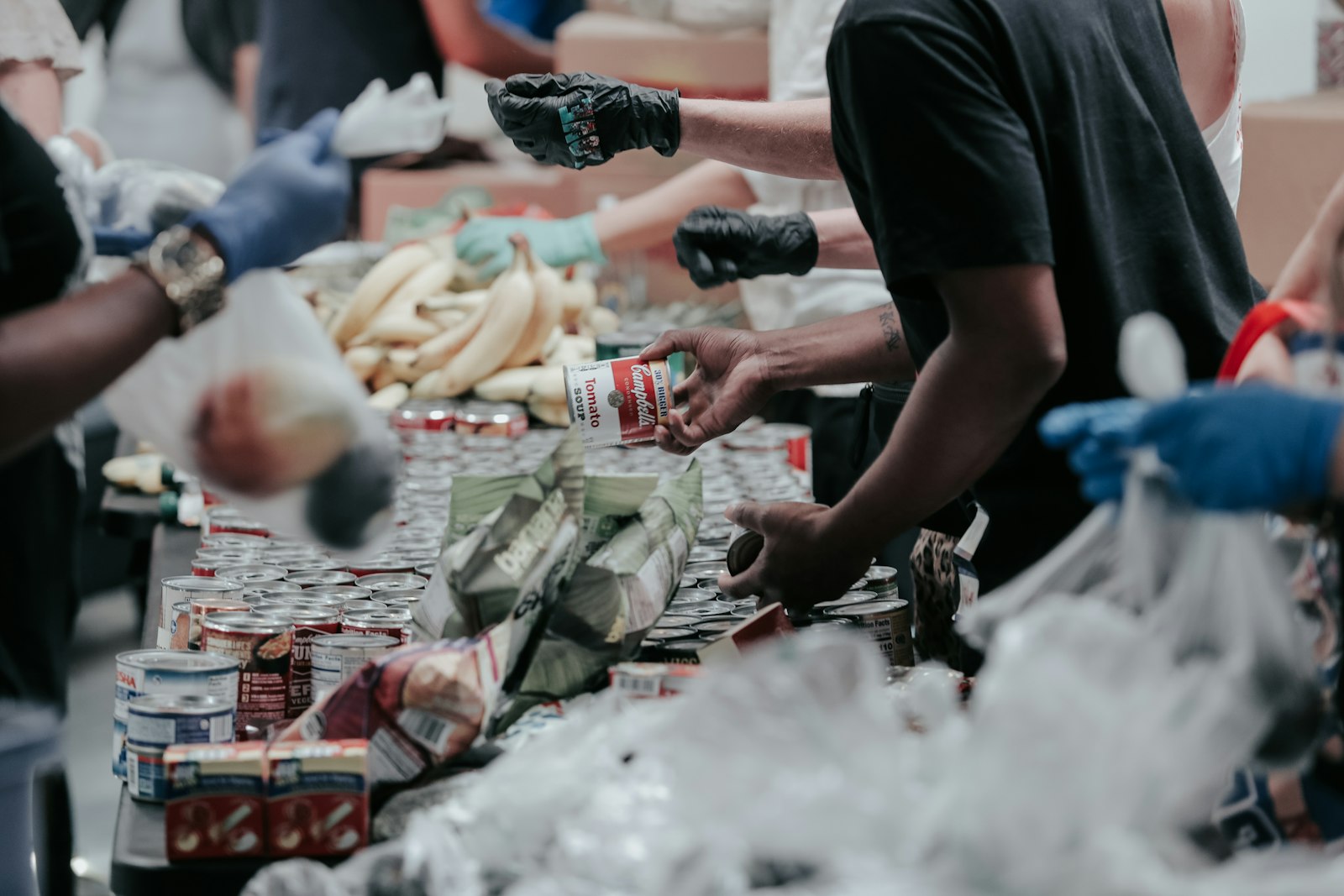
So the picture is this. The same Utahn who will spend a Saturday morning sorting cans at a food bank will, eight days later, leave a mail ballot on the kitchen counter unopened—a ballot that decides who sits on the city council, who sets the property-tax rate, who approves or blocks the subdivision down the road, and who hires the next police chief. The generosity is real. It simply stops at the mailbox.
We will spend a Saturday serving our neighbors and then skip the one vote that governs the street we share with them. The instinct is right; the aim is short.
Low turnout is not a neutral fact. When regular residents sit out, the field does not go empty—it gets handed to whoever is organized and motivated enough to fill it. A council seat decided by a few hundred votes is a council seat enormously responsive to any group that can reliably deliver a few hundred votes. That is how zoning fights, budget decisions, and local tax questions quietly get settled by a sliver of the community while the majority is busy being generous somewhere else.
Why Localism Is a Conservative Instinct
Conservatives have a word for the belief that problems should be solved at the smallest, closest, most accountable level that can actually solve them. The word is localism, and it runs straight through the tradition. Alexis de Tocqueville, touring a young America, concluded that its genius lived not in Washington but in the township—in the "habits of the heart" formed when free people governed the small places they could see and touch. Self-government, he argued, is learned locally or not at all.
That is not nostalgia. It is the operating logic of the whole pragmatic-conservative model Utah has built. We argue for local control of public lands because the people who live nearest a resource usually steward it best. We defend municipal authority against one-size-fits-all mandates. We trust communities to make trade-offs for themselves. But localism is a two-way promise: if we want decisions made close to home, we have to actually govern close to home. A conservative who demands local control and then skips the local election is asking for authority without accepting the responsibility that comes with it.
Gratitude is where that responsibility starts. To be grateful for a place—for good schools, safe streets, open space, a downtown worth walking—is to acknowledge that someone built and maintained those things, and that they will not maintain themselves. The civic habit is simply gratitude that refuses to be a spectator.
Turning the Habit Toward the Ballot
The good news is that a state this generous does not need a change of character. It needs a change of aim. The same people already doing the hard, unglamorous work of community life are exactly the people who should be shaping its governance. A few concrete moves close the gap:
- Treat the local ballot like a service project. You already set aside time for the food drive and the church assignment. Put the next municipal election on the same calendar, in ink, a month ahead.
- Learn four names. You cannot know every statewide candidate, but you can learn who represents your district on the city council and school board. Four names is a low bar and a high return.
- Bring one other household with you. Local elections are decided at the margin, and the margin is your neighbors. An unopened mail ballot becomes a cast one with a single text message.
- Show up once in person. Attend one city council or school board meeting a year. You will never read a local candidate's mailer the same way again—and low-turnout races reward the handful of people who actually do.
Notice that none of these ask anyone to become a political obsessive. They ask the opposite: that the ordinary, grateful, neighborly Utahn apply the habit already running at full strength everywhere else to the quiet corner of civic life where it has gone missing.
The Civic Habit
Thanksgiving is a national pause to count what we have been given. For Utahns, an honest accounting includes the fact that we live in communities other people maintain—often through exactly the volunteer hours that put this state at the top of the national rankings. The question the holiday quietly poses is whether our gratitude ends at the table or carries into the harder, less celebrated work of self-government.
A movement built on local investment and principled, problem-solving conservatism should have an easy answer. The civic habit is not a burden laid on top of the generous life Utahns already lead. It is the natural extension of it—gratitude that bothers to vote, localism that bothers to show up.
If you want to turn that instinct into something lasting, the Republican Roundtable PAC is where engaged Utahns do it together. Join us, and help make sure the people who give the most to their communities are also the ones deciding how those communities are governed.
Sources
- Utahns spent more than 114 million hours volunteering last year — FOX 13 News (AmeriCorps / U.S. Census data, Sept. 2022–Sept. 2023)
- Which states volunteer the most? — USAFacts
- Volunteering and Civic Life: State Trends — AmeriCorps
- Examining the data: a glance at voting participation rates in Utah County — Daily Herald
Photo by Joel Muniz on Unsplash