
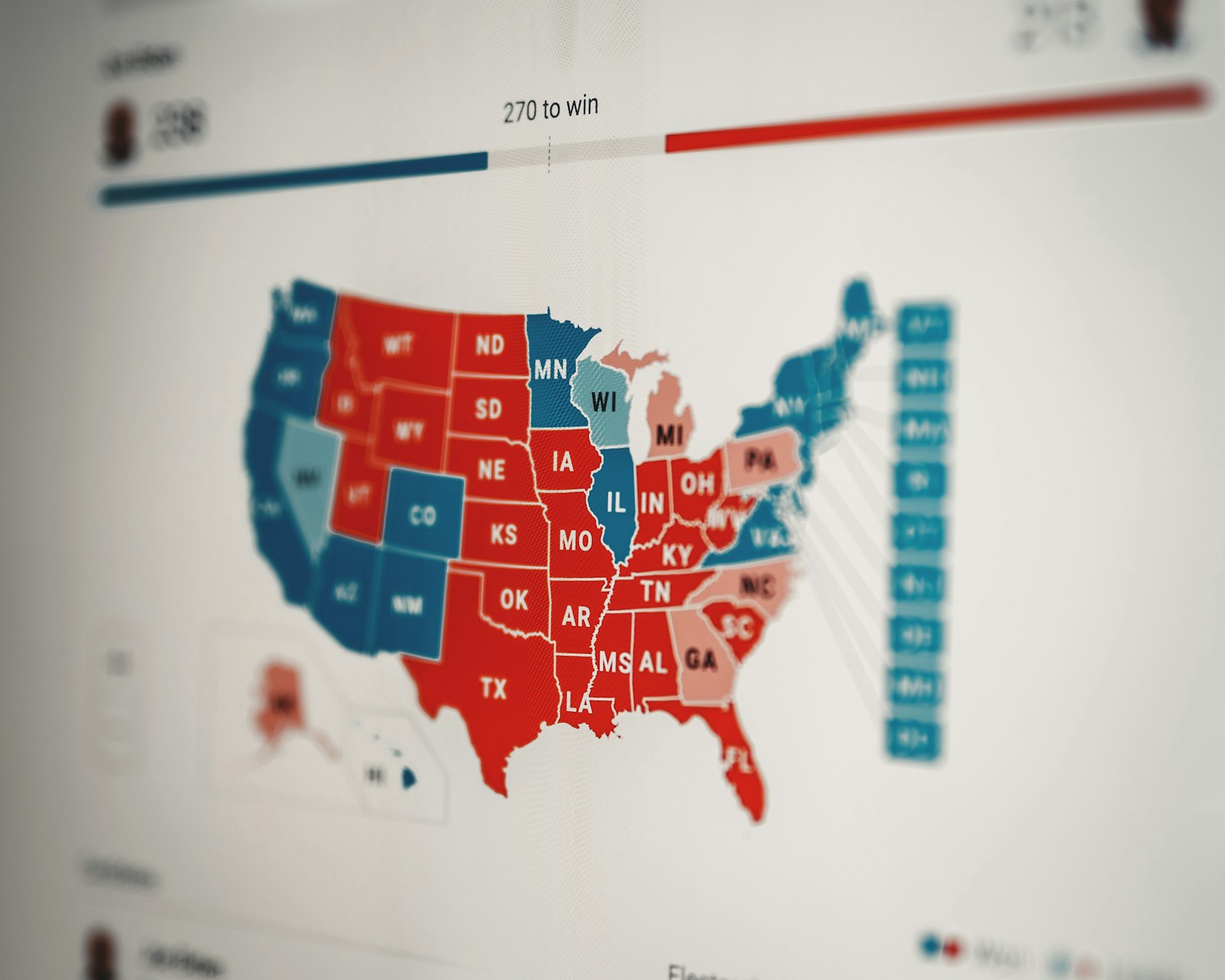
The clearest lesson of Utah's 2026 election results is that lines on a map decided more than any campaign did. Republicans held three of Utah's four congressional seats comfortably and lost the fourth—the new, Salt Lake County–based 1st District—by a margin that was baked in the moment a court finished redrawing the boundaries. That is not a story about Utah turning purple. It is a story about geography, and it deserves to be read honestly rather than spun in either direction.
These are still unofficial returns, with county and state canvasses still to come, so treat every specific number below as preliminary. But the shape of the outcome is already settled, and the shape is what matters.
What the Utah 2026 Election Results Show
Start with the congressional delegation, because that is where the national attention landed. According to the unofficial statewide tally, Utah will send three Republicans and one Democrat to the U.S. House—a net Democratic gain of one, and the first Utah congressional seat a Democrat has won since Ben McAdams lost his in 2020.
The irony is hard to miss: the seat Democrats won is the one McAdams himself claimed. In the redrawn 1st District, the former Salt Lake County mayor and one-term congressman carried roughly 70 percent of the vote. The other three races broke the way Utah's partisan math almost always breaks:
- Blake Moore held his seat with about 50 percent to his Democratic challenger's 42—the closest of the three Republican wins, and the one worth watching.
- Celeste Maloy won reelection with roughly 57 percent.
- Mike Kennedy took his district with about 54 percent.
Three safe Republican seats and one safe Democratic seat. If that sounds less like a wave and more like an engineering outcome, that is exactly right.
The Map Was the Story
For most of the last decade, Salt Lake County—Utah's Democratic population center—was divided among all four congressional districts, which diluted its votes and produced a 4–0 Republican delegation. That changed when a state judge ruled the Legislature's map violated Proposition 4, the anti-gerrymandering standard Utah voters themselves approved, and ordered a new map for 2026. The court-ordered boundaries keep Salt Lake County largely intact, creating one compact, Democratic-leaning district and three safely Republican ones.
Republicans fought the map hard and lost at every level. The Utah Supreme Court rejected the Legislature's appeal in February, and a federal panel declined to block the court-ordered map for the midterms. By spring, forecasters already rated the new 1st District as safely Democratic. In other words, the November result was knowable in March. The campaign filled in the decimal points.
When the boundary fight decides the seat, the most important election of the cycle happened in a courtroom, not at a polling place.
That is an uncomfortable truth for both parties, and it is the first thing a serious conservative movement should sit with. Process is not a sideshow to politics; it is the arena. Utah Republicans can win or lose future delegations in redistricting rooms and in the quality of the maps they draw—and voters, through Proposition 4, have made clear they are watching how those maps get made.
The Signal Hiding in Moore's Margin
If the 1st District was lost to geography, the more instructive number is the one in the 2nd. A roughly eight-point win is a comfortable night by national standards and a narrow one by Utah's. It is the kind of margin that rewards constituent service, candidate quality, and showing up—and punishes coasting.
The takeaway is not panic. It is discipline. A district that is competitive by Utah standards is a district where turnout and organization actually swing the result, and where the performative style of politics—long on slogans, short on delivery—carries a real cost. Republicans who treat every seat as a lifetime appointment tend to find out otherwise in exactly these districts.
Voters Drew Their Own Line on Direct Democracy
The congressional races got the headlines, but the two statewide amendments may say more about how Utahns actually think. Voters split them cleanly, and the split is revealing.
Amendment A passed with roughly 61 percent in favor, modernizing how proposed constitutional amendments are published—replacing the old newspaper-publication requirement with a 60-day online and statutory process. Amendment B failed decisively, with well under 40 percent of voters supporting it. Amendment B would have required a 60 percent supermajority for any citizen initiative that raises taxes; voters rejected it by a wide margin.
Read those two results together and a coherent instinct emerges. Utah voters were happy to tidy up an outdated procedural rule, but they were not willing to raise the bar on their own power to legislate directly. Even in one of the most reliably Republican states in the country, the citizen initiative is popular, and voters guard it. That is worth remembering the next time anyone proposes making it harder to use.
What It Means for Conservatives
Put the pieces together and the 2026 results point less to a change in Utah's politics than to a change in its terrain. Here is how we read it.
- Compete everywhere, including the seat you just lost. A district drawn to lean Democratic is not the same as a district conceded forever. Candidates and causes that show up, organize, and govern well can make even unfavorable ground competitive over time. Writing off Salt Lake County is how you keep losing it.
- Earn the safe seats; don't assume them. Moore's margin is the warning shot. The fastest route to a competitive Utah is Republicans who mistake a friendly district for a free pass.
- Respect the rules voters wrote. Proposition 4 and the Amendment B result are the same message from two directions: Utahns take their own democratic tools seriously. A movement that wants durable trust competes within those rules rather than against them.
None of this is a cause for alarm, and none of it is a cause for spin. It is a cause for the kind of pragmatic, problem-solving conservatism that has always served Utah best—win on performance and persuasion, not just on boundaries. For a fuller look at what was actually on this year's ballot, see our guide to Utah's 2026 ballot.
The Republican Roundtable PAC exists to recruit and support candidates who can do exactly that work—competing seriously everywhere, governing well, and earning the trust of Utah voters rather than taking it for granted. If that is the kind of politics you want to see more of in Utah, join us. The next map, and the next election, are already on the way.
Sources
- 2026 General Election results (unofficial) — Utah Lieutenant Governor / electionresults.utah.gov
- 2026 United States House of Representatives elections in Utah — Wikipedia (unofficial returns)
- Judge adopts Utah congressional map that creates a Democrat-leaning district for 2026 — CNN
- Utah Supreme Court rejects Legislature's redistricting appeal; court-ordered map still stands — Utah News Dispatch
- Federal court denies blocking new congressional map for Utah's 2026 midterms — ABC4
- Redistricting in Utah ahead of the 2026 elections — Ballotpedia
- Election 2026 Results: Utah Amendments A & B — KUER
Photo by Clay Banks on Unsplash