
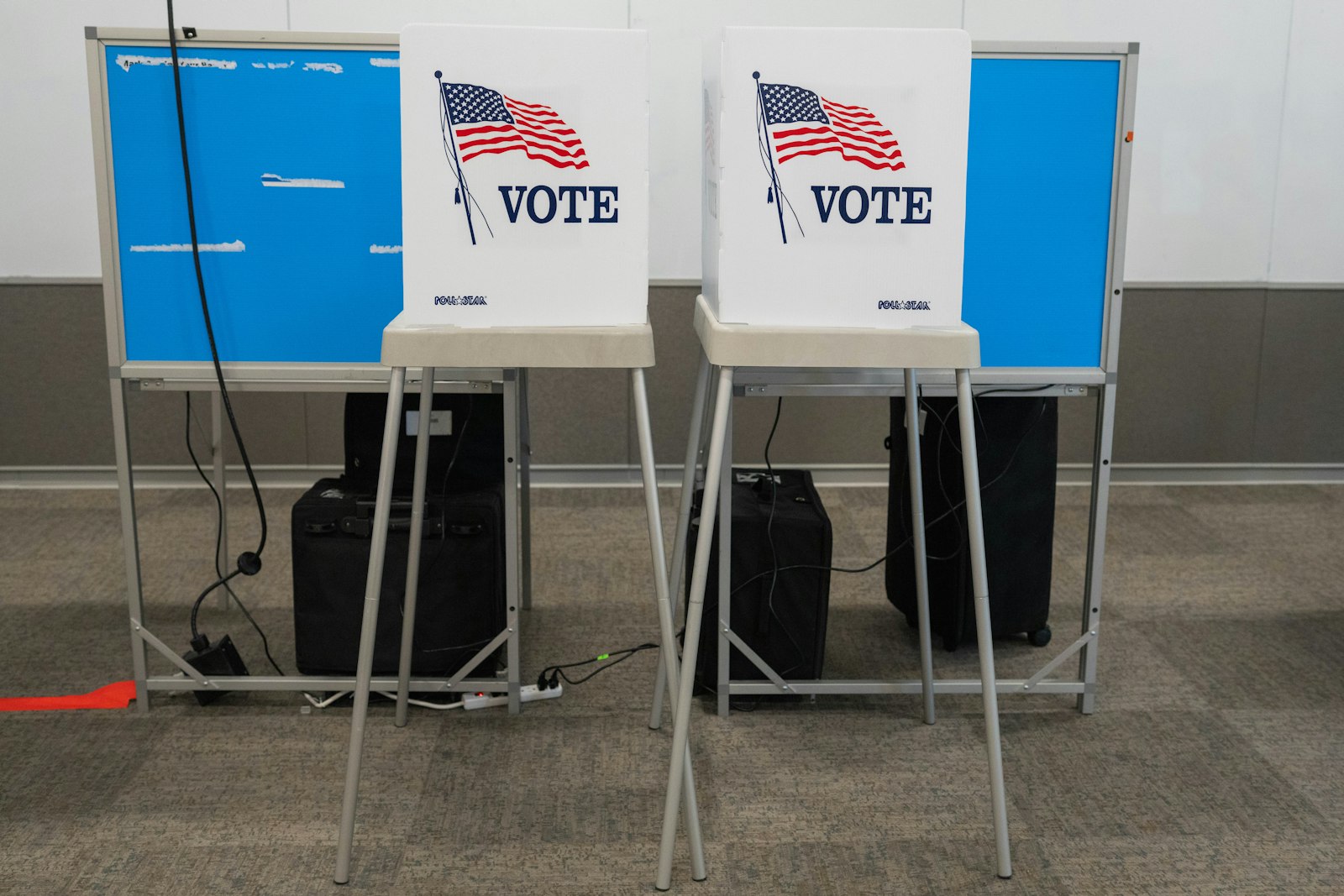
Here is the short version of what's on the Utah ballot in 2026: all four U.S. House seats, the entire state House of Representatives, roughly half the state Senate, State School Board seats, a long list of county and local offices, judicial retention questions, and two constitutional amendments. What is not on the ballot surprises people—there is no U.S. Senate race and no governor's race this cycle.
That gap at the top of the ticket is not an accident of scheduling so much as a feature of the calendar. It also changes the math of the whole election. When there's no marquee statewide contest pulling voters to the polls, the down-ballot choices—the ones that actually write Utah law and set your property tax rate—get decided by whoever bothers to show up. For a state that prides itself on practical, well-governed conservatism, a midterm like this one is a test of whether that reputation is earned or merely inherited.
The general election is Tuesday, November 3, 2026. Here's the honest, section-by-section breakdown.
The top of the Utah ballot in 2026: quieter than you'd think
Utah's two U.S. senators are both mid-term. Mike Lee's seat is next up in 2028, and John Curtis, elected in 2024, isn't up again until 2030. Governor Spencer Cox won reelection in 2024, so the governorship sits out this cycle as well. Utah's statewide constitutional officers—attorney general, treasurer, auditor—run on the presidential cycle, which means they're off the 2026 ballot too.
Strip those away and the highest-profile race most Utahns will see is for the U.S. House. All four congressional districts are on the ballot, and every district runs on new boundaries drawn for this election. If you're not certain which district you now live in, that's worth checking before November—redistricting quietly moved a lot of households.
Where Utah law actually gets written
The legislative races are the ones that deserve more attention than they usually get. Every seat in the 75-member Utah House of Representatives is up, and 15 of the 29 state Senate seats are on the ballot. By the March filing deadline, 284 candidates had filed for those legislative seats—145 Republicans, 109 Democrats, 21 Forward Party candidates, a handful of Constitution Party and unaffiliated hopefuls.
Two things are worth holding in mind about those numbers. First, in a lot of Utah districts the real contest already happened in the June primary, not in November—which is exactly why primaries decide more Utah races than the general election does. Second, "284 candidates" is not the same as "284 competitive races." Plenty of seats drew a single major-party filer. A ballot line without a choice is still a choice someone else made for you.
A legislature you can name three members of will pass the laws you live under for the next two years. That is not a slogan. It is the plainest description of what this ballot does.
Rounding out the middle of the ballot: State School Board districts, county commission and clerk and sheriff races in many counties, city and special-district seats, and the judicial retention questions—the yes/no votes on whether to keep sitting Supreme Court, Court of Appeals, District Court, and Juvenile Court judges. Those judicial questions sit near the bottom of the ballot and get skipped constantly. They shouldn't be.
The two constitutional amendments
The most consequential items on the 2026 ballot may be the two proposed amendments to the Utah Constitution. Both were referred by the Legislature, and both are worth reading before you fill in an oval.
The 60% threshold for tax-raising initiatives (SJR 2)
This amendment would require that any citizen-initiated ballot measure to impose, expand, or increase a tax pass with at least 60% voter approval rather than a simple majority. The Legislature referred it in 2025 as Senate Joint Resolution 2, clearing the Senate 21-8 and the House 55-17, with Republicans in favor.
There's a genuinely conservative case on each side of this one, and voters deserve to hear both. Supporters argue that raising taxes is precisely the kind of decision that should require a durable, broad consensus—not a bare 50%-plus-one that can be reversed the next cycle. Skeptics counter that a supermajority requirement is a heavy thumb on the scale against citizens using the initiative process at all; historically, most Utah initiatives that reached the ballot didn't clear 60%. A principled voter can land on either side. What no one should do is vote on it without knowing what it does.
Modernizing how amendments are published (HJR 10)
The second amendment is more procedural but has a sharp recent backstory. House Joint Resolution 10 would change the constitution's requirement that proposed amendments be published in newspapers in every county for two months, instead letting the Legislature set the publication method by statute and requiring publication in the 60 days before the general election.
Why now? In 2024, the Utah Supreme Court voided two amendments—Amendment A and Amendment D—after officials failed to meet the existing publication rules, with the court stressing that publication requirements are constitutional safeguards, not paperwork. HJR 10 is the Legislature's answer: update the mechanics for an era when, as the resolution's sponsor put it, newspapers are no longer how most Utahns get their news. The fair question for voters is whether the new standard keeps the safeguard intact or quietly loosens it.
Your ballot is not the same as your neighbor's
Because so much of this ballot is district-based—your House member, your senator, your school board seat, your county races—the specific contests you see depend on your address. The two constitutional amendments are statewide and appear for everyone; almost everything else varies. The single most useful thing you can do before November is confirm your registration, your district, and your ballot's contents directly at vote.utah.gov, the state's official election site. Deadlines, drop-box locations, and mail-ballot rules all live there, kept current by the people who actually run the election.
It also helps to understand how the items on your ballot became law in the first place—the amendments started as resolutions that moved through committees and floor votes, the same way any bill becomes law in Utah. An informed vote is a lot easier when the process isn't a black box.
The bottom line
A midterm with no Senate seat and no governor's race can feel like a year to sit out. It's the opposite. This is the ballot that fills the Legislature that writes Utah's budget, sets its tax policy, and decides how the state grows—plus two amendments that touch the constitution itself. Low-attention elections are where small, organized groups get outsized results. The antidote is boring and effective: read the ballot, verify the facts, and vote all the way down.
If you want to help make sure Utah keeps electing principled, problem-solving conservatives up and down that ballot—not just at the top—that's the work the Republican Roundtable PAC exists to do. Join us, and help us make the quiet elections count. For a fuller walkthrough of dates and how to vote, see our 2026 general election guide.
Sources
- 2026 Candidate Filings (offices on the ballot) — Utah Voter Information (vote.utah.gov)
- Official Utah voter portal: registration, districts, deadlines, drop boxes — vote.utah.gov
- Utah's 2026 midterm elections, by the numbers — Utah Politics
- The Utahns running for Congress in 2026 (new district boundaries) — Salt Lake Tribune
- Utah refers 60% tax-initiative amendment (SJR 2) to 2026 ballot — Ballotpedia News
- Utah lawmakers move to set a higher bar for ballot initiatives — KPCW
- Publication-requirements amendment (HJR 10) and the voided 2024 Amendments A and D — Ballotpedia News
Photo by Jesse Paul on Unsplash