
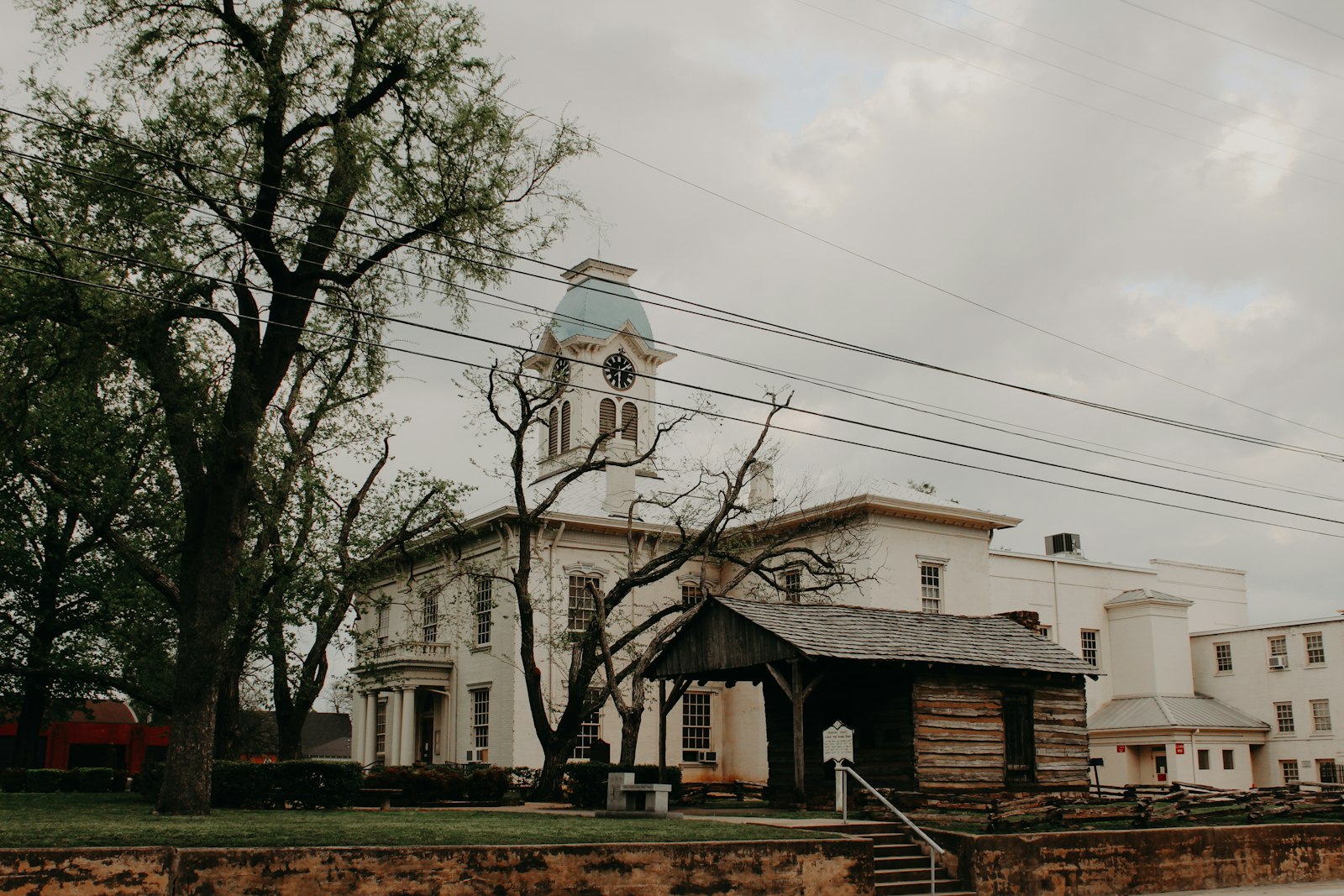
Here is the short version: in most of Utah, three elected commissioners control the property-tax rate you pay, the roads outside city limits, the county jail, the health department, and the machinery that registers voters and counts ballots. That is the quiet weight behind Utah county commission elections—a handful of seats that touch more of your daily life than almost anything decided under the Capitol dome, decided by a fraction of the voters who show up for the races at the top of the ticket.
If you can name your governor and your congressman but not your county commissioners, you are in good company. You are also getting the balance exactly backwards. The commission is where the abstractions of "limited government" and "fiscal discipline" either become real or quietly don't.
What a County Commission Actually Controls
Utah's counties are not ceremonial. They are the level of government that carries the load state law hands down and cities can't cover. A county commission adopts the annual budget, sets the county's portion of your property tax, and sits as the local Board of Equalization that hears assessment appeals. It funds and oversees the sheriff and the jail, the county attorney, public health, and—critically—the clerk's office that administers elections.
In the unincorporated stretches between cities, the commission is the local government: it writes the land-use rules, approves the subdivisions, and decides where the roads and culinary water go. For a fast-growing state, that is not a footnote. As one Utah County profile put it plainly, three commissioners on staggered terms hold more power than most residents realize—the same three people write the ordinances, adopt the budget, and supervise the departments that carry both out.
Most of that work is mandatory. Corrections, elections, courts support, and the assessment-and-collection apparatus for property tax are statutory obligations, not optional programs a commission can pause when revenue tightens. That is exactly why who holds these seats matters: the job is less about grand vision and more about running essential services well, on a budget, without waste.
Three People, Staggered Terms
Utah has 29 counties, and the structure governing them is more varied than most voters assume. State law lays out four optional forms of county government: the county commission, the expanded county commission, the county executive-and-council, and the council-manager form, as set out in Utah's forms-of-county-government statute.
In practice, the large majority of Utah counties still use the traditional three-member commission, in which the same board holds both legislative and executive authority. A handful have chosen otherwise: Salt Lake County runs a nine-member council with an elected mayor, Summit County a five-member council with an appointed manager, and Cache County an elected executive with a part-time council. The point of the staggered terms in the commission form is deliberate restraint: seats turn over in different cycles so no single election can sweep out the entire board at once.
That design has a civic consequence. Because only one or two seats are typically on the ballot in a given year, a determined, informed minority of voters can decide who runs the county—for better or worse.
Why Utah County Commission Elections Fly Under the Radar
The neglect isn't mysterious. County races sit far enough down the ballot that "downballot fatigue" is real—voters who researched the presidential and Senate contests reach the county section and start guessing or skipping. And in Utah's most Republican counties, the commission is effectively chosen in the June primary, not November, which means the decisive election is the one with the lowest turnout of all.
Combine those two facts and you get a level of government with enormous practical authority that is routinely settled by a small, self-selected slice of the electorate. For anyone who takes limited, accountable government seriously, that ought to be an invitation, not a shrug.
The commission is where the abstractions of "limited government" and "fiscal discipline" either become real or quietly don't.
The Fiscal Stakes Are Real
Nowhere is the commission's reach more concrete than your tax bill. Counties in Utah cannot quietly let property-tax revenue balloon with rising home values; under the state's Truth in Taxation framework, a taxing entity that wants to collect more than the prior year's revenue from existing property has to advertise it, hold a public hearing, and vote for the increase in the open. That guardrail is one of the best fiscal disciplines Utah has—but it only works if voters are paying attention when the commission holds that hearing.
They do hold them. Facing budget pressure, the Utah County Commission approved a property-tax increase for its 2025 budget, with commissioners calling it necessary to fund core services. Reasonable people can disagree about any single vote. What isn't debatable is that the decision was made by county commissioners, in a county building, at a meeting most residents never attended—and that the people in those chairs got there through an election most residents didn't study.
2026 Puts It on the Ballot Again
This cycle offers a textbook illustration. In Utah County, two of the three commission seats are open in 2026 after both sitting commissioners, Amelia Powers Gardner and Brandon Gordon, chose not to seek reelection, and the county clerk's office is up as well. Two-thirds of a county commission turning over at once, alongside the office that runs the county's elections, is about as consequential as local government gets.
Utah County is only one example. Across the state, commission and council seats are on the ballot this November, and the specific offices, candidates, and deadlines vary by county. The single most reliable place to confirm exactly what is on your ballot and how to cast it is the state's official portal, vote.utah.gov. Check it, and check your county clerk's page, rather than relying on secondhand summaries.
How to Vote a County Race Like It Matters
Because it does. A commission candidate deserves the same scrutiny you'd give a legislative one—arguably more, because the job is so operational. A few questions worth asking:
- Growth and land use: How will you handle development in the unincorporated county—and can you name a specific project you'd have voted differently on?
- The budget: Where would you cut before asking for a Truth in Taxation increase, and where wouldn't you?
- Core services: What is your plan for the jail, the sheriff, and public health, which together consume much of the budget?
- Elections administration: How will you ensure the clerk's office runs accurate, transparent, well-audited elections?
- Accountability: How will residents know whether you kept these commitments in four years?
None of that requires special expertise. It requires showing up—reading the candidate profiles, attending or streaming a commission meeting, and voting the whole ballot instead of the top third of it. That is pragmatic, problem-solving conservatism in its most practical form: taking the level of government closest to home as seriously as we take the ones farthest away.
The Republican Roundtable PAC exists to encourage exactly this kind of engaged, ground-level citizenship and to support principled candidates willing to do the unglamorous work of governing well. If that's the kind of Utah you want to build, join us—and start by learning the three names on your county commission.
Sources
- Utah Code — Forms of County Government (county commission form) — Utah Legislature
- Utah — Government and society (county government forms) — Encyclopaedia Britannica
- The Utah County Commission: Three People, Staggered Terms, and More Power Than Most Residents Realize — Provo.com
- Utah County approves 'absolutely necessary' tax increase for 2025 budget — KSL
- County clerk, 2 commission seats up for election in Utah County Republican primary — KSL
- Official Utah voter portal — vote.utah.gov
Photo by Nichole Hamilton on Unsplash