
Utah is not running out of electricity. Not yet. But for the first time in a generation, the state is running the math on whether it can keep the lights on affordably while also being the place the country's AI and data-center boom wants to build.
That math is why a conservative Utah energy policy has quietly become one of the biggest stories at the Capitol this year—bigger, in dollar terms, than almost anything else on the legislature's plate. Utah now hosts 48 operational data centers drawing roughly 920 megawatts of power, with another 2,600 megawatts under construction, an amount that would more than triple the state's current data-center load, according to an April 2026 industry analysis reported by the Deseret News. Grid regulators at the North American Electric Reliability Corporation have flagged 2031 as a year of elevated risk for Utah, when extreme conditions could produce real electricity shortfalls if new supply doesn't keep pace.
Utah's response has been to reject the false choice between "old" energy and "new" energy entirely.
Why This Is Conservative Energy Policy, Not Industrial Policy
It would be easy to mistake Utah's energy push—new state offices, nuclear subsidies, a governor holding summits with cabinet secretaries—for the kind of top-down industrial policy conservatives usually distrust. It isn't, and the distinction matters.
A genuinely conservative approach to energy doesn't pick winners by fiat; it removes the regulatory friction that keeps any winners from emerging at all, and lets reliability and cost decide the rest. That's the operating premise behind what House leadership has branded Utah's "all-of-the-above" energy strategy: keep the state's existing coal and natural gas plants running as long as they're needed, streamline permitting for nuclear and geothermal, and let the market—not a mandate—decide how fast renewables scale. As of 2024, that mix was roughly 45% coal, 32% natural gas, and 22% renewables, with solar responsible for about 94% of new generating capacity added since 2015. Utah also had the lowest average residential electricity price in the nation in 2024.
That last fact is the one worth protecting. Cheap, reliable power is a competitive advantage Utah has held for decades. The entire point of an all-of-the-above strategy is to keep it that way while demand climbs faster than it ever has.
Operation Gigawatt: The Plan to Double Utah's Power Supply
Governor Spencer Cox's answer, first unveiled as "Operation Gigawatt", is blunt about the scale required: double Utah's electrical generating capacity, from roughly 10 gigawatts to 20 gigawatts by 2034. To put that in perspective, adding the next 10 gigawatts in a decade means building, in ten years, what took Utah about 70 years to build the first time.
The plan rests on four goals: expand transmission capacity, develop new generation across both conventional and emerging sources, clear the regulatory and policy barriers standing in the way of nuclear and geothermal projects, and direct state research dollars toward the technologies most likely to deliver. As Cox put it when he launched the initiative:
"We will build upon Utah's 'any of the above' energy policy with a 'more of the above' approach."
The legislature has backed the rhetoric with money and statute. Lawmakers appropriated $10 million in 2025 to fund Operation Gigawatt's early work, and the 2026 general session added a fresh round of legislation aimed squarely at unlocking new supply.
What the 2026 Legislature Actually Passed
Energy was one of the busiest policy lanes at the Capitol this year. A few bills stand out.
HB 78 — Nuclear Energy Regulatory Office
Utah created a dedicated Nuclear Energy Regulatory Office, funded with $1.2 million, with a mandate to streamline licensing for nuclear projects and enter cooperative agreements directly with federal regulators. Cox signed the bill, along with companion measures SB 135 and SCR 1, in a March 2026 ceremony formally expressing the state's ambition to become a national hub for nuclear development.
HB 514 — A Buyer for Utah's Coal Plants
Rather than mandate coal retirement or force plants to stay open indefinitely, HB 514 creates a new Energy Infrastructure Service District tasked with finding a private buyer and operator for the coal-fired plants currently owned by the Intermountain Power Authority. It's a market-based off-ramp: let the plants keep generating for whoever wants to run them, rather than shutting them down by statute or subsidizing them forever.
SB 132 and HB 238 — Protecting Existing Ratepayers
As data centers and other large industrial users sign up for enormous new power loads, the legislature has moved to make sure ordinary Utahns don't foot the bill for someone else's server farm. SB 132 (2025) allows the largest electricity users to source and finance their own power rather than drawing on the shared grid at everyone else's expense, and HB 238 (2026) keeps the Public Service Commission in the room for regional grid decisions that affect Utah ratepayers.
Nuclear's Moment—and a Reality Check
Nuclear power is where Utah's ambitions are most visible. In May 2026, Cox hosted the Operation Gigawatt Summit in Park City, drawing U.S. Energy Secretary Chris Wright, Nuclear Regulatory Commission Chairman Ho K. Nieh, EPA Administrator Lee Zeldin, and Sen. John Curtis, among others, to workshop what organizers called a national blueprint for nuclear expansion. Federal officials at the summit described an ambition to quadruple U.S. nuclear capacity over the next 25 years.
Utah's more concrete near-term opportunity is fuel, not reactors. The U.S. Department of Energy has named Utah a finalist to host a federal nuclear fuel life-cycle innovation campus, with a proposed Tooele County site focused on recycling nuclear fuel—work state leaders say could eventually support thousands of jobs if the state is selected and the facility is built out over time. Both qualifiers matter: this is a finalist bid, not a groundbreaking, and the jobs figure is a long-run projection, not a current payroll.
That distinction is worth holding onto more broadly. Advanced nuclear reactors remain years from commercial operation in Utah under any realistic timeline, and the water and financing questions around large-scale nuclear buildout in the arid West are real. Betting the whole strategy on reactors that are still a decade out would be a mistake. Betting on the regulatory and workforce groundwork now—while leaning on gas, coal, geothermal, and transmission upgrades in the meantime—is the more disciplined version of the same ambition.
The Ratepayer Fight Nobody's Ignoring
None of this matters if ordinary Utahns end up subsidizing it through their power bills. That tension came to a head this summer when Rocky Mountain Power, the state's primary utility, filed a proposed settlement with the Utah Public Service Commission that would produce a net 6.4% decrease in bills for the average residential customer, hold off on filing another general rate increase through 2028, and commit $2 billion to Utah grid infrastructure. The settlement still folds in a $93 million, 4.2% base-rate increase that took effect July 1—offset, the company says, by other components of the deal. As of this writing, the Public Service Commission has not yet issued a final ruling.
That fight is exactly where a pragmatic conservative energy policy earns its keep. The state wants aggressive new generation and grid investment. It also has an obligation to make sure the households and small businesses who didn't ask for a 2,600-megawatt data-center boom aren't the ones who pay for it.
What to Watch
- The Public Service Commission's ruling on the Rocky Mountain Power settlement will set the tone for how future large-load costs get allocated between industrial users and residential ratepayers.
- Whether Utah wins the federal nuclear fuel campus bid will determine if Tooele County becomes a real anchor for the state's nuclear ambitions or a bid that didn't land.
- Transmission buildout, the least glamorous of Operation Gigawatt's four pillars, will decide whether new generation—wherever it comes from—can actually reach the homes and businesses that need it.
- A buyer for the Intermountain coal plants under HB 514 will show whether the market-based off-ramp for coal works as designed, or whether the state ends up needing a plan B.
The Bottom Line
Utah's energy story right now is a genuinely conservative one: don't mandate a single winning technology, don't shut down what's still working, and don't let the state's famously cheap electricity become a casualty of a boom it didn't cause. Nuclear, natural gas, coal, geothermal, and solar all have a role to play, and the state's job is to clear the runway for whichever ones can actually deliver, on budget and on schedule, without handing the bill to households that had no seat at the table.
The Republican Roundtable PAC believes that kind of disciplined, all-of-the-above approach—more supply, fewer mandates, and a close eye on who ends up paying—is exactly the model Utah should keep building on. If you'd like to be part of that work, join us.
Sources
- Growing data center demand faces power and water challenges — Deseret News
- News Release: Gov. Cox unveils "Operation Gigawatt" — Office of Governor Spencer J. Cox
- Utah's All-of-the-Above Strategy for Affordable, Reliable Energy — Utah House of Representatives
- Governor Cox signs three bills into law, including resolution to support nuclear industry — ABC4
- Energy and political power brokers descend on Utah for Operation Gigawatt — Deseret News
- Utah is a finalist to build a massive federal nuclear hub. What's next? — Salt Lake Tribune
- Utah may solve one of nuclear energy's biggest problems: nuclear waste — Deseret News
- Utah's Big Nuclear Bet – Feasible or Fantasy? — Circle of Blue
- Rocky Mountain Power's Utah rate conflict may be settled with an additional 4.2% hike — Utah News Dispatch
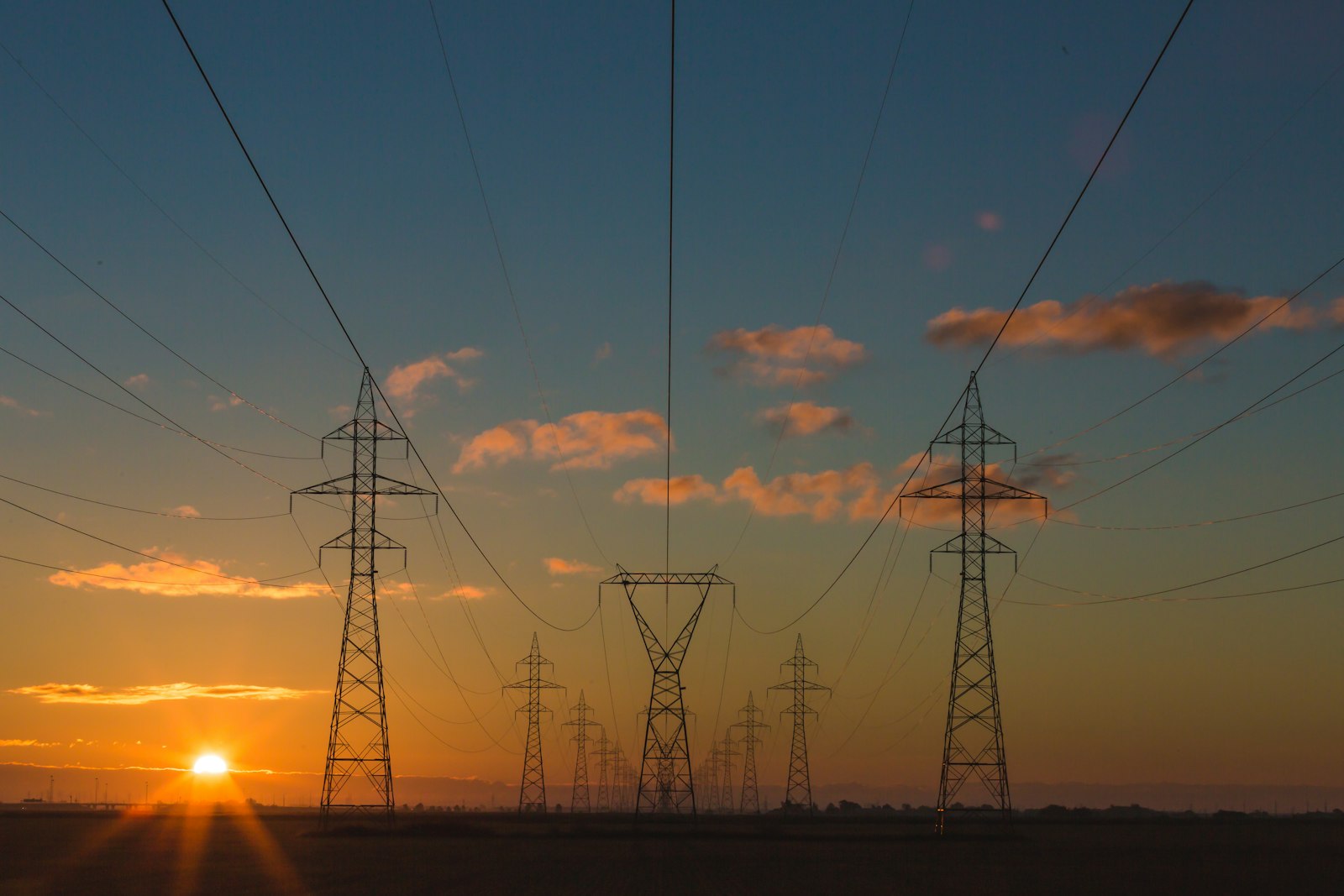
Photo by Matthew Henry on Unsplash