
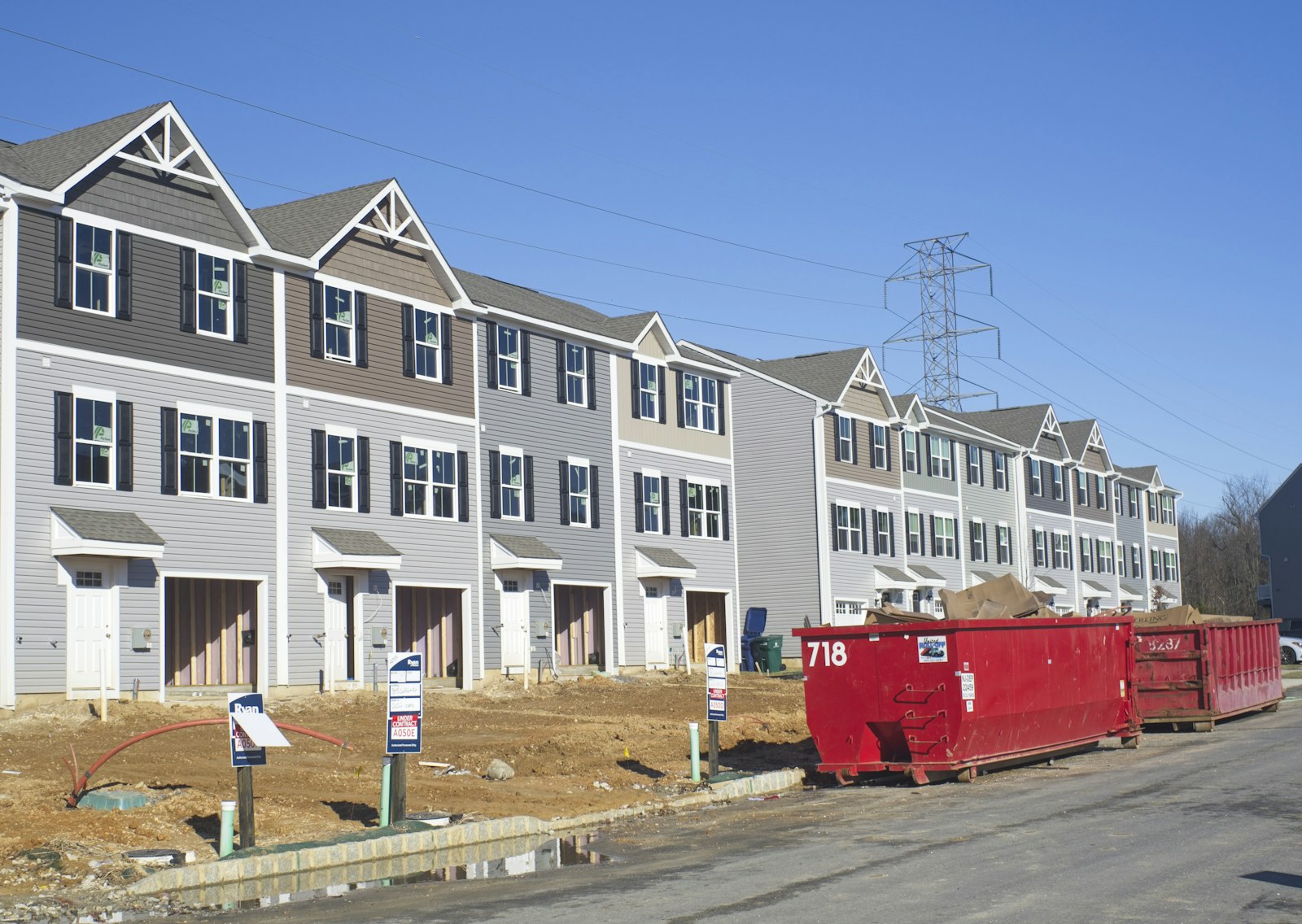
Ask any group of Utahns under 40 what's on their mind, and you will get one answer faster than any other: we can't afford a house here anymore.
That isn't anxiety. That's arithmetic. The statewide median home price in Utah is now $574,200. In Salt Lake County, it's $550,000 and still rising. The median age of a first-time homebuyer is approximately 40 years old—roughly a decade older than the historical norm. A new poll heading into the 2026 legislative session found that one in three Utah voters identifies housing affordability as the single most important issue facing the state, more than double the share that picked the next-ranking topic.
For a state whose entire economic identity is built on growth, opportunity, and young families, those numbers are flashing red.
What's encouraging is that Utah's political leadership has, on the whole, reached the right diagnosis. What's still uncertain is whether the cure will be delivered at the scale the math demands.
This Is a Supply Problem
Strip away the polling and the policy memos and the housing conversation comes down to one stubborn fact: Utah is not building enough homes for the people who want to live here, and especially not the kind of homes a young family or a first-time buyer can actually afford.
Conservatives have an instinct on this question that we should trust more. When prices rise faster than incomes for a sustained period, it almost always means the underlying market has been constrained. The fix is to let it build—literally—its way back to balance. More supply lowers prices. More options expand choice. More density at the right scale, in the right places, with the right design, makes neighborhoods more livable, not less.
That is the conservative argument, and it is also the empirically correct one. Cities and states that have allowed more construction have seen prices stabilize. Cities and states that have not, haven't. There are very few policy questions in American life with a record this clear.
Cox's Moonshot: 35,000 Starter Homes by 2028
Governor Spencer Cox has set the headline number: 35,000 new starter homes—priced under $400,000—across the state of Utah by the end of 2028. The state has backed the goal with a $150 million investment, and dubbed it the "Utah First Homes" initiative.
The early results are mixed. Roughly 5,000 starter homes were added to the housing stock in 2024. In 2025, that number slowed to about 1,500. Cox and his team have been honest that the trajectory needs to change. To hit 35,000 by 2028, Utah needs not a steady pace but a rising one—roughly 10,000 starter homes per year in 2026, 2027, and 2028.
That is not going to happen without two things: more buildable land at the local level, and faster, cheaper permitting. Both touch on the deepest fault line in conservative housing politics—the tension between local control and statewide supply.
It is also worth being clear-eyed about what "starter home" can actually mean in this market. Even with state subsidy, builders in parts of Salt Lake County have suggested that the realistic entry price for a new construction starter home is closer to $450,000, with the most aggressive projects targeting $350,000. That is still meaningfully cheaper than the county median—but it underscores how much further the supply curve has to bend before "starter" feels like an honest word again.
What the 2026 Session Actually Did
The 2026 legislative session was the most ambitious in recent memory on housing supply, even if it left some of the most contested ideas on the cutting room floor. Three bills are worth understanding.
HB 184 — Local Land Use Revisions
The bill most likely to move the needle. HB 184 allows homes on smaller lots than current zoning permits in Utah cities, and gives local governments a 30-day window to respond to a smaller-lot request. If they don't respond in time, the request is automatically approved.
That last clause is the heart of the matter. For decades, the most effective tool used to slow housing supply in growing communities has been the calendar—endless review cycles, postponed votes, delayed hearings. A 30-day shot clock with default approval is exactly the kind of process reform that costs the state nothing and unlocks years of stalled projects.
HB 492 — Infrastructure for Housing
Sponsored by Rep. Calvin Roberts, R-Draper, HB 492 funds the infrastructure—roads, water, sewer—that has to exist before private developers can put thousands of new homes into the ground. Builders have been clear for years that infrastructure timing, more than capital, is what determines whether a project pencils. HB 492 is the state stepping in to break that bottleneck.
HB 68 — Division of Housing
HB 68 creates a dedicated Division of Housing within the Governor's Office of Economic Opportunity—essentially the same governance move Utah made with the Great Salt Lake when it created a commissioner's office. Single point of accountability, single strategic plan, single set of metrics. Less glamorous than the other two bills, more important than it looks.
Cities and states that have allowed more construction have seen prices stabilize. Cities and states that have not, haven't.
What Didn't Pass—and Why It Matters
The session also rejected several proposals aimed directly at the starter-home shortfall. Some failed on policy merits. Others failed because the politics of "I want more housing, just not on this street" remain stubbornly bipartisan.
That's the honest tension at the center of this issue. The same Utahns who tell pollsters that housing affordability is the state's top problem will, on occasion, show up at a city council meeting to oppose the apartment complex or the smaller-lot subdivision that would directly address it. The pattern is so common it has a name: NIMBY, "Not In My Back Yard." It is not unique to Utah, and it is not unique to either political party.
Reconciling those two impulses is the central political work of the next several legislative sessions. A pragmatic conservative answer says: yes, communities should have meaningful input over how they grow, AND the state has a legitimate interest in ensuring that local input cannot indefinitely block the basic right of Utahns to buy a home in the state where they were raised. Both halves of that sentence matter.
Why This Is a Conservative Issue
It would be easy to misread Utah's housing push as a left-leaning intervention in a private market. It is the opposite.
The biggest distortions in American housing markets, here and elsewhere, are the result of accumulated regulation—decades of zoning rules that mandate larger lots, single uses, wider setbacks, taller parking minimums, and slower permitting than any market needs. Most of those rules were not adopted with bad intent. They piled up, one council meeting at a time, until the cumulative effect was a state where a single-family home requires roughly $200,000 of dirt before you put the first nail in.
Repealing or modernizing those rules is conservative work. So is using state-level coordination to make sure the price of housing reflects supply and demand, not the political preferences of whoever was on the planning commission in 1987.
It is also, frankly, conservative work in a more personal sense. The traditional family that conservatives say we want to protect requires somewhere to live. The young professional we say we want to retain in Utah requires somewhere to live. The skilled-trades worker who keeps Utah's economy running requires somewhere to live. A movement that calls itself the party of family formation cannot afford to be indifferent to whether forming a family is financially possible.
What Comes Next
Three things will determine whether Utah meets the moment.
- Implementation matters more than legislation. HB 184's shot clock only works if cities know they will be held to it. HB 492's infrastructure dollars only matter if they reach the right projects on a fast timeline. The new Division of Housing only works if it has the authority and the staff to actually coordinate.
- Local elections are now housing elections. Many of the decisions that will determine whether Utah builds enough homes are made at the city council and county commission level. The same low-turnout dynamic that shapes statewide primaries shapes municipal races even more dramatically. Showing up changes outcomes.
- The conversation has to stay honest. Housing math doesn't care about political branding. If the only ideas that get traction are the ones that make every local stakeholder happy, supply will keep falling short of demand and the median first-time buyer's age will keep climbing.
The Bottom Line
Utah's housing problem is not mysterious. It is not a sign that the state is failing. It is the predictable consequence of being one of the most desirable places in America to build a life. The question is whether we will respond with the kind of pragmatic, supply-side, conservative governance that built Utah's economy in the first place—or whether we will let inherited rules and local veto points slowly price the next generation out of the state.
The Republican Roundtable PAC believes the answer is clear, and we are committed to supporting the leaders willing to deliver it. If you'd like to be part of that work, join us. Utah's next generation of homeowners is counting on this one.
Sources
- New poll: Housing dwarfs all other issues for Utah voters ahead of legislative session — Deseret News
- Utah housing market update: What you need to know for 2026 — KSL
- 3 positives and 3 challenges expected in Salt Lake's home market in 2026 — KSL
- Governor Cox's "moonshot" goal of building 35,000 starter homes by 2028 — ABC4
- Utah First Homes / Housing — Office of Governor Spencer J. Cox
- Utah lawmakers target starter homes with lot size reform (HB 184) — HousingWire
- Utah Legislature weighs homebuyer aid, zoning changes — KUER
- Here are the laws passed that are meant to make life more affordable in Utah — Deseret News
Photo by Ernie Journeys on Unsplash