
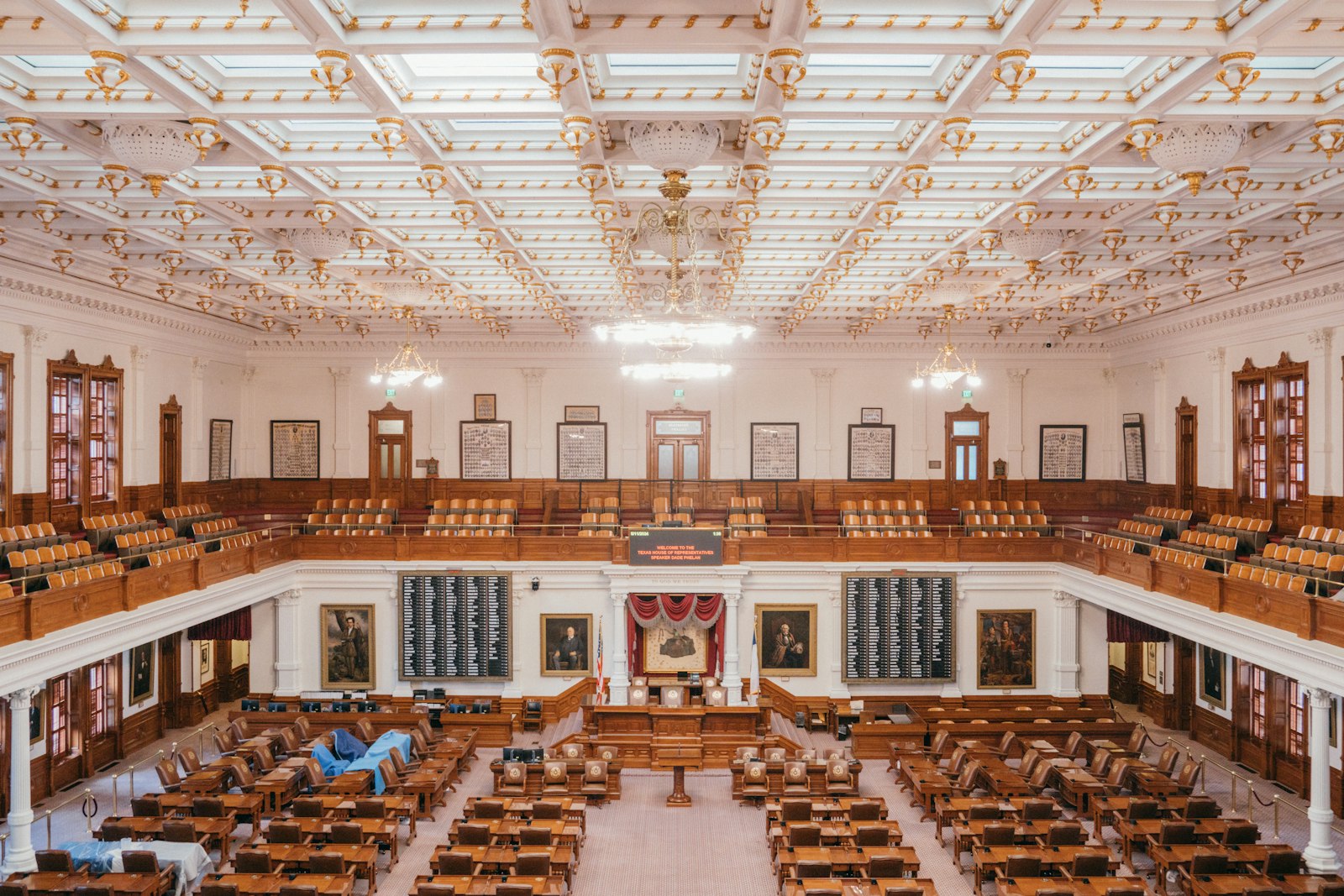
The 2026 election did not turn Utah blue, and it did not end Republican control of the Legislature. What it did was narrower and more interesting: it ended the GOP's two-thirds supermajority in the House for the first time in decades, roughly doubled the size of the Democratic minority, and installed a new slate of leaders in both parties. If you want to understand who will actually write Utah's laws in 2027, you have to start with the people, not the headlines.
So here is a field guide to the new Utah legislators and leaders taking office in January. It is not a scorecard and it is not a prediction. It is a map of who holds which gavel, what the November results changed, and how to keep track of your own representatives once the gaveling starts.
The big picture: what November changed
Start with the one structural fact that matters most. Utah's House has 75 seats and its Senate has 29, which means a two-thirds supermajority takes 50 votes in the House and 20 in the Senate. For years Republicans cleared both bars comfortably. After November 3, they no longer clear the House bar.
House Republicans lost approximately 16 seats, according to current election results, surrendering the two-thirds margin that had let them pass constitutional amendments and override vetoes without a single Democratic vote. On the other side of the aisle, the House Democratic caucus is set to roughly double in size. The Senate moved less dramatically: the Democratic caucus there is set to gain two seats, leaving Republicans with a still-commanding majority.
Even the leadership class took casualties. Sen. Kirk Cullimore, widely viewed as the likely next Senate president, lost his reelection bid to Democrat Shana Anderson—and that was after sitting Senate President Stuart Adams had already lost his primary over the summer. Two of the men expected to run the Senate are simply gone.
Who's running the Republican majorities
Republicans still hold the gavels in both chambers, and their caucuses have already chosen the leaders who will set the 2027 agenda. These names are worth committing to memory, because they decide which bills get heard and which quietly die.
In the Senate, Republicans elevated Sen. Evan Vickers of Cedar City to Senate president, with Sen. Chris Wilson as majority leader, Sen. Mike McKell as majority whip, and Sen. Keven Stratton as assistant whip. In the House, Speaker Mike Schultz of Hooper was re-selected by his caucus, joined by Rep. Casey Snider as majority leader, Rep. Candice Pierucci as majority whip, and Rep. Cal Roberts as assistant whip.
Both leaders read the results as a message rather than a fluke. "The public is telling us things," Vickers said. Schultz was blunter about the national undertow: "We were not immune to what happened nationally." That is a healthier reaction than denial, and it is the kind of accountability a governing majority owes the voters who hired it.
Who's leading the expanded Democratic minorities
A minority caucus twice its former size is not a trivia question—it is the difference between a party that can be routed around and one that has to be negotiated with on anything requiring two-thirds. Utah's Democrats spent the two weeks after the election choosing who will wield that new leverage.
House Democrats, meeting on November 16, elected Rep. Jennifer Dailey-Provost of Salt Lake City as minority leader, unseating longtime leader Rep. Angela Romero. Her team includes Rep. Doug Owens of Millcreek as minority whip, Rep. Ashlee Matthews of Kearns as assistant whip, and Rep. Verona Mauga of West Valley City as caucus manager.
In the Senate, Minority Leader Luz Escamilla was re-elected to lead the Democratic caucus, with Sen. Karen Kwan as minority whip, Sen. Jen Plumb as assistant whip, and newly elected Sen. Silvia Catten of Salt Lake City as caucus manager, replacing Sen. Kathleen Riebe.
Why a broken supermajority actually matters
It is tempting to treat "supermajority" as insider jargon. It isn't. The two-thirds threshold is wired into how Utah governs in three specific ways:
- Constitutional amendments. Putting a proposed amendment on the ballot requires a two-thirds vote in each chamber. A House minority above one-third can now block any amendment it unites against.
- Veto overrides. Overriding a governor's veto takes two-thirds. With the House margin gone, the governor's veto pen is suddenly a sharper instrument.
- Emergency and procedural moves. Calling itself into special session and various fast-track procedures lean on supermajority math that no longer runs on autopilot.
None of this hands Democrats the agenda. Republicans will still pass the budget, still chair every committee, and still decide what reaches the floor. What changed is that a handful of the most consequential tools now require a conversation across the aisle. For a PAC that believes in pragmatic, problem-solving conservatism, that is not a catastrophe—it is an incentive to govern persuasively rather than by sheer force of numbers.
A majority that has to make its case is usually a better majority than one that never has to.
What it doesn't change
Keep the result in proportion. Utah remains a solidly Republican state. The GOP still controls the governorship and both legislative chambers, the Senate moved by only two seats, and the conservative policy framework that has given Utah its low taxes, balanced budgets, and fast growth is not going anywhere. The incoming class is more ideologically mixed than the last one, but the center of gravity is still center-right.
The more durable lesson is about how these legislators got here in the first place. Most Utah races are effectively decided long before November—in the caucus-convention system and the June primary, where turnout is a fraction of a general election. If the 2026 results surprised you, the place to engage earlier next cycle is upstream of the general ballot.
How to read the new class yourself
You do not need to take anyone's summary on faith, including ours. Utah publishes everything you need to track the incoming Legislature directly:
- Find your legislators. Enter your address at the Utah State Legislature's site, le.utah.gov, to see exactly which representative and senator will speak for your district in 2027.
- Confirm the official results. Reporting is fast but unofficial until the canvass. For certified winners, go to the source: vote.utah.gov and the Lieutenant Governor's election results.
- Watch the committee assignments. In January, leadership hands out committee seats and chairmanships. That roster tells you more about the session's real priorities than any press release.
- Learn the machinery. A new legislator's influence runs through the committee process. Our explainer on how a bill becomes law in Utah is the fastest way to follow where a bill lives or dies.
Do that much and you will understand the 2027 Legislature better than most people who only read the election-night headlines.
The Republican Roundtable PAC exists to recruit and support principled candidates who can win these seats and govern well once they hold them—especially now that governing well means building coalitions, not just counting votes. If you want Utah's next class of legislators to reflect pragmatic, principled conservatism, join the Founding Forty and get involved. The work that shapes the 2028 ballot starts now.
Sources
- New leaders emerge at Utah Capitol after election shakeup — Deseret News (Nov. 6, 2026)
- Utah House Dems pick Jennifer Dailey-Provost as minority leader after midterm gains — KUER (Nov. 16, 2026)
- Utah Democrats elect new House leadership — Deseret News (Nov. 17, 2026)
- Utah's GOP supermajority is broken. Here's the Democratic leverage that follows — KUER (Nov. 13, 2026)
- Find your legislators and track bills — Utah State Legislature
- Official Utah election information and certified results — vote.utah.gov
Photo by Albert Canite on Unsplash