
Utah's June 23 primary produced one of the biggest upsets in recent state political history: Senate President Stuart Adams, in the Legislature since 2010 and one of the most powerful Republicans in the state, lost his own party's nomination. So did Sen. Dan McCay and Rep. Trevor Lee, two more sitting legislators with years of seniority.
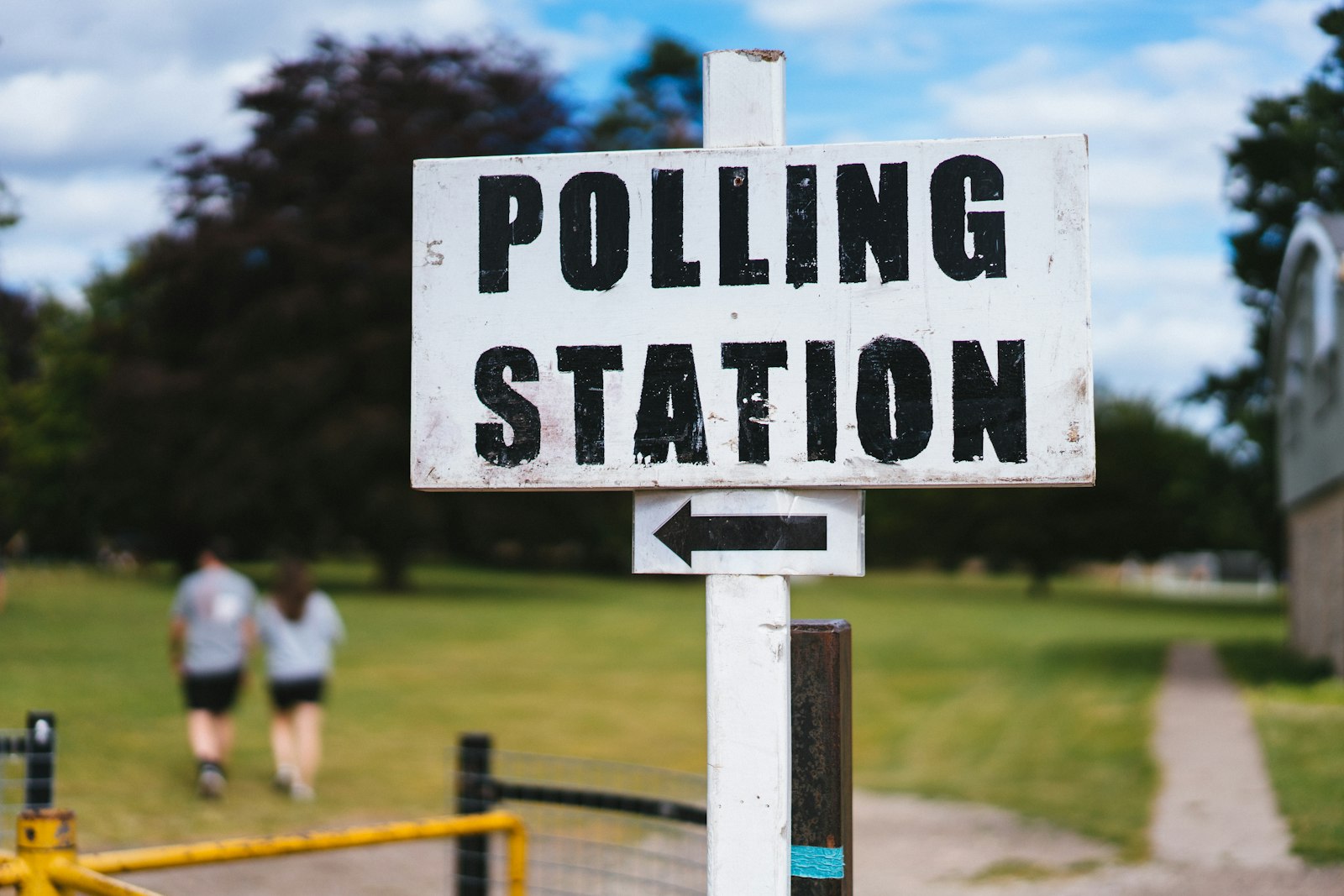
None of that happened because Utah Republicans turned on their own party. It happened in an election where statewide turnout stood at just 19.6% the Monday before Election Day, on track to land somewhere in the mid-30s once every last ballot was counted—well short of the roughly 40% turnout Utah has historically seen in congressional primary years. Utah primary turnout in 2026 is, in other words, the whole story. A handful of the most motivated voters in the state decided who leads the Utah Senate for the next several years. That's not a knock on the outcome—it's a fact about how the system works, and Utah Republicans who care about who actually represents them need to understand it.
The Numbers Behind the Upset
Utah's Office of the Lieutenant Governor tracks turnout in real time as mail ballots come in, and the numbers heading into Election Day were stark. Statewide turnout sat at 19.6% as of the Monday before the primary closed, with Salt Lake County—the state's most populous—running slightly ahead at 26%. State Director of Elections Ryan Cowley called it "pretty light" compared to other elections, but not unusual: "Primaries have historically had a lower turnout," he said, adding that he expected the final number to climb into the mid-30s as last-minute ballots came in. Even at the high end of that estimate, it means roughly two out of every three registered Utahns sat this one out.
Do the arithmetic and the stakes come into focus. As of Utah's current statewide voter registration statistics, Republicans are the largest bloc in the state at just over 1.03 million registered voters out of roughly 2.09 million total. In a primary where a large share of races functioned as the real contest—because the Republican nominee wins the general election outright in much of the state—a mid-30s turnout rate among that Republican universe means a few hundred thousand voters set the direction of state government for years to come.
A Sitting Senate President, Gone
Nowhere did that math matter more than in Senate District 7, where Adams—who also chaired Utah's Military Installation Development Authority (MIDA)—lost his primary to attorney Stephanie Hollist, with businessman Braden Hess finishing third. It marked the first time a sitting Utah Senate president has lost re-election since 2002, according to KUER's reporting on the race. Utah Politics reported that the combined "not Stuart Adams" vote outnumbered Adams' own vote total by nearly 2-to-1—a margin that would have been unthinkable for a legislative leader of his stature in a higher-turnout environment. The proximate cause was a single, hyper-local controversy: the Stratos data center project in Box Elder County, which Adams' authority helped advance. Utah State University political science professor Damon Cann told KUER the project "very quickly escalated into the most controversial and hot-button issue in the state of Utah, and Stuart Adams ends up paying the price." Without it, Cann said, "this almost certainly would have been an uncompetitive primary election."
"Primaries have historically had a lower turnout, so I don't think this is too far off from what we normally see in a primary election." — Ryan Cowley, Utah Director of Elections
It Wasn't Just Adams
Two more veteran Republican legislators went down the same night, both by wide margins:
- Sen. Dan McCay lost Senate District 18 to fellow lawmaker Rep. Doug Fiefia by 39 points, a defeat Deseret News tied partly to lingering voter frustration over his role in Utah's new state flag.
- Rep. Trevor Lee lost House District 16 to former Layton mayor Bob Stevenson by 33 points, a race complicated by unpopular immigration legislation Lee had sponsored and past business controversies that surfaced before the GOP convention.
Statewide, the pattern held: incumbency did little to protect state legislators this cycle. A Deseret News analysis found that Adams and McCay both significantly outspent their challengers and still lost—money and seniority simply weren't enough to overcome a small, motivated electorate voting on a narrow set of grievances.
Congress Told a Different Story
The same night, Utah's congressional incumbents had no trouble at all. Rep. Blake Moore won his Second District primary with 58% of the vote, and Rep. Celeste Maloy took the Third District with 67%, according to Deseret News' rundown of the results—both comfortable wins despite a court-ordered congressional map that reshuffled district lines this cycle. Jason Perry of the University of Utah's Hinckley Institute of Politics summed up the split verdict: "Utah Republicans weren't simply voting for or against incumbents...they were looking at candidates individually." That's a healthier read than a blanket anti-incumbent wave—but it's also a reminder that name recognition and fundraising, which travel well in a high-profile congressional race, do far less for a state senator whose name most voters have never heard.
Fewer Contests, Higher Stakes
The irony is that 2026 was, on paper, a quieter primary year than usual for incumbents. Ballotpedia's analysis of candidate filings found that only 10.4% of Utah state legislative incumbents faced a primary challenge this cycle—the lowest share in four election cycles and below the 12.1% average from 2010 to 2024. Just eight incumbents statewide, six of them Republicans, drew a challenger at all. That makes the outcome sharper, not softer: of the small number of incumbents who did face voters, several of the most powerful lost—in an election where a large majority of the electorate wasn't paying enough attention to show up.
What This Means Going Forward
- A single issue can now decide a leadership race. Cann's read—that data centers will be "perceived as much more politically sensitive" in future sessions—is really a broader point about low-turnout primaries: a well-organized, single-issue bloc can outweigh a legislative record built over 16 years.
- Money is not a substitute for votes. Outspending an opponent matters far less when the total electorate is small enough that a few thousand energized voters can swing a district.
- The Republican primary is still where Utah's elections are actually decided. As RRPAC has written before, in most of Utah the primary is functionally the general election. Nothing about this cycle changed that; it reinforced it.
Why This Is a Pragmatic Conservatism Story
It would be easy to read this piece as an argument for or against any one of the winning or losing candidates. It isn't. The Republican Roundtable PAC doesn't believe low turnout is inherently good or bad for any particular result—we believe it's a structural problem for a party that claims to represent the broad center of Utah voters.
When turnout tracks near one-in-five voters ahead of Election Day and tops out in the mid-30s, the primary electorate skews toward whoever is angriest about the most recent controversy—not necessarily toward the candidates best equipped to keep delivering the balanced budgets, tax cuts, and steady growth that have made Utah a national model. Sometimes that produces good outcomes. Sometimes it produces a coin flip decided by a fraction of the electorate on a single local issue. Either way, a party that wants durable, principled leadership needs more of its own voters in the room, not fewer.
That's the case RRPAC keeps making, cycle after cycle: recruit pragmatic, problem-solving candidates, and then do the unglamorous work of turning out the voters who already agree with them. If the 2026 primary proved anything, it's that the second half of that equation is just as important as the first. Join us, and help make sure the next primary electorate looks more like Utah, not less.
Sources
- Primary watch: Utah voter turnout under 20% — KSL
- Utah primary turnout lags expectations as Election Day approaches — KUTV
- Current Voter Registration Statistics — Utah Lieutenant Governor's Office
- Data center backlash helps sink Utah Senate President Stuart Adams in primary — KUER
- Utah Primary Election Results 2026: Winners and Losers — Utah Politics
- The big takeaways from Utah's primary elections — Deseret News
- New trends and old rules in Utah's primary elections — Deseret News (Opinion)
- Utah state legislative primaries show downward trend in incumbent contests — Ballotpedia News
Photo by Phil Hearing on Unsplash