
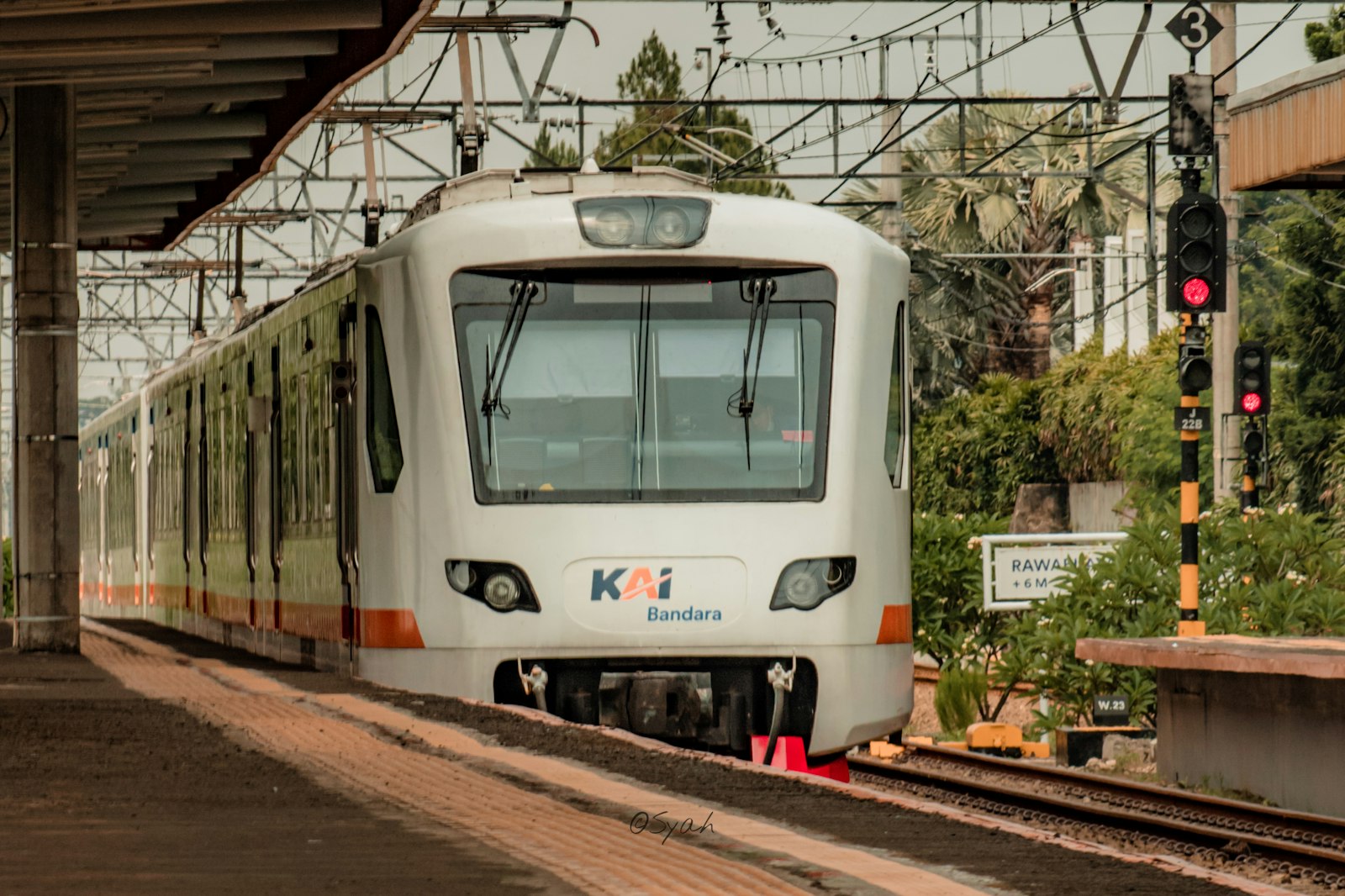
Every Utahn already knows the feeling. The on-ramp that used to flow now backs up by 7:15. The subdivision that was a hayfield two years ago now pushes a few hundred more cars onto the same two-lane road. Growth is not an abstraction here—it is the traffic in front of you.
And it is only accelerating. Utah's own Unified Transportation Plan projects the state will add roughly two million people by 2050, climbing past five million residents, with most of that growth concentrated along the Wasatch Front. You cannot build a state for five million people on infrastructure sized for three. That is the plain arithmetic behind every serious conversation about Utah transportation and transit policy.
The good news is that Utah has a governance model built for exactly this kind of long-horizon problem. The Unified Plan already brings UDOT, the Utah Transit Authority, and the state's metropolitan planning organizations into a single coordinated framework—shared goals, shared timelines, shared assumptions about what gets built and when. Most states don't plan roads and rail off the same page. Utah does. The question isn't whether to plan; it's whether we fund and govern that plan at the scale the growth demands.
Roads and Rail Are Not a Choice—They're a System
The tired framing of transportation politics pits highways against transit, as if a dollar for one is a dollar stolen from the other. That framing fails the math test. When your population is adding tens of thousands of people a year in a valley boxed in by mountains and a lake, you need every mode working at once. A lane of freeway and a train line aren't rivals; they're two tools moving the same growing population.
Senator John Curtis put the pragmatic case plainly this summer: "Even if people don't like transit, they need to realize that every person that rides transit is a car not on the street." That's not a progressive talking point—it's a throughput argument. Transit's value to a driver who will never board a train is the seat it takes off the road ahead of them.
Utahns are, in fact, using the system. UTA reported 40.3 million total boardings in 2025: more than 20.6 million on buses (up 1.5%), nearly 13 million on TRAX, and more than 4 million on FrontRunner for the second straight year. Vanpool trips surged 15.7% past 1.3 million, and UTA On Demand—the agency's flexible, call-a-ride service for lower-density areas—grew 13.6% to 645,308 boardings. Those last two numbers matter for a conservative reader: they show demand for transit that isn't a giant fixed rail line, but a flexible service that fits how suburban Utah actually lives.
What the 2026 Legislature Actually Built
The 2026 general session was one of the more consequential in recent memory on transportation, and it's worth understanding what passed—because the details reveal a governing philosophy, not just a spending total.
SB 197 — Rebuilding UTA's governance
Sponsored by Sen. Wayne Harper, SB 197 replaced UTA's board of trustees with a seven-member part-time commission, deliberately mirroring the structure of the Utah Department of Transportation. The point is accountability: one clear governing body, held to the same standard as the agency that builds the roads. Conservatives have argued for years that transit dollars deserve the same scrutiny as highway dollars. This is that principle written into law.
SB 242 — The omnibus, and a real fight over local control
SB 242, the session's wide-ranging transportation "omnibus," carried genuinely useful provisions—among them $3 million to replace aging buses in rural communities and support for FrontRunner expansion. But it also became the session's sharpest flashpoint, because one provision gave the state new leverage over Salt Lake City street projects—bike lanes, bus lanes, and traffic-calming measures. Critics called it a state takeover of city streets. The bill failed a House committee before being resurrected and passed.
We'll be honest about the tension here, because our readers deserve it. A pragmatic conservative instinct cuts both ways on SB 242. There's a real statewide interest in keeping arterial roads moving—a single city shouldn't be able to bottleneck a corridor that the whole region depends on. But local control is also a conservative value, and a state veto over neighborhood street design is a serious tool that should be used sparingly and transparently. During debate, even Republicans balked: Rep. Nelson Abbot of Orem questioned whether an omnibus that broad even respected Utah's single-subject rule for legislation, and voted no. That's a healthy debate to have inside the party, not one to paper over.
SB 36 — A louder voice for fast-growing communities
Perhaps the most quietly important bill: SB 36 ordered a structural review of the Transportation Commission and shortened commissioners' terms so the state's highest-growth areas are better represented in the decisions that shape their roads and transit. If the growth is in southern Utah County, western Salt Lake County, and Washington County, the people making funding calls should reflect that map. This is decentralization aimed at legitimacy—putting decisions closer to the places living with the consequences.
A lane of freeway and a train line aren't rivals. They're two tools moving the same growing population.
Paying For It Without a Boom-and-Bust Gimmick
None of this is free, and the traditional way Utah paid for roads—the gas tax—is quietly breaking. As vehicles get more efficient and more drivers go electric, the gas tax collects less per mile driven even as the pavement wears the same. A funding source tied to gallons burned can't keep pace with a state adding 45,000-plus people a year.
Utah's answer is a user-fee model that fits conservative principles well: the Road Usage Charge, which lets electric and hybrid owners pay by the mile instead of a flat annual fee. For the registration year beginning July 1, 2026, the RUC rate is 1.25 cents per mile, capped at $180. The logic is straightforward: you pay for the road in proportion to how much you use it. That's a fairer, more durable structure than hiding road costs inside a tax that a more efficient car lets you dodge.
The Legislature also tightened the discipline around local transportation fees. HB 425 now requires municipalities to study actual road-usage patterns before imposing new transportation fees—a small but real guardrail against fees untethered from need. Combine user fees for the highways with evidence-based local charges and coordinated state investment, and you have a funding model that grows with demand instead of lurching from surplus to shortfall.
Building Ahead of the 2034 Deadline
Utah has an unusual forcing function most states never get: a hard, public deadline. The Salt Lake Temple open house and the 2034 Winter Olympics will put millions of additional visitors onto the state's transportation network, and that clock is concentrating minds.
The centerpiece is FrontRunner 2X. In August 2026, the Federal Transit Administration approved the project to enter its Engineering phase, moving it toward nearly $1.3 billion in federal funding. The plan adds 26.1 miles of double track across 11 locations so trains can run every 15 minutes at peak instead of hourly. Curtis captured why frequency is the whole game: "The difference between waiting an hour or 15 minutes is a big deal... you almost don't even need to check a schedule." A train you have to plan your life around is a train most people won't take. A train that's just there takes cars off I-15.
It isn't only rail. Ahead of 2026, UTA accelerated the Midvalley Express—an all-electric bus rapid transit line connecting Murray, West Valley City, and Taylorsville—and approved 20 new Utah-built Stadler TRAX cars with level boarding across the system. Bus rapid transit is the underrated workhorse here: it delivers much of rail's reliability at a fraction of the capital cost, and it can be routed where the growth actually is.
A Citizen's Guide to Getting Involved
Transportation can feel like something that happens to you. It doesn't have to. Here is where an ordinary Utahn has real leverage over what gets built:
- Show up for your regional plan. The projects that reach a ballot or a budget were shaped years earlier in the Unified Plan and your metropolitan planning organization's process. Public comment windows on regional transportation plans are open, published, and thinly attended—which means the comments that do come in carry weight.
- Make city council a transportation vote. Road width, connectivity between subdivisions, whether a corridor gets a bus lane—much of it is decided locally. As we've written before, the points where citizens have leverage over Utah policy are earlier and more local than most people assume.
- Ask candidates the specific question. Not "do you support transportation," but "how would you fund the roads and transit this district needs by 2035, and who decides?" The answers separate the serious from the performative.
- Judge the plan by throughput, not ideology. The right test for any project—road or rail—is whether it moves more people more reliably per dollar. Hold every proposal, from a freeway widening to a FrontRunner double-track, to that same standard.
The Bottom Line
Utah's transportation challenge is not a crisis of failure. It's the bill that comes due for being one of the most desirable, fastest-growing places in America to build a life. The state that plans roads and rail off the same page, funds them with honest user fees instead of a fading gas tax, and pushes decisions toward the communities living with the growth is doing exactly the pragmatic, problem-solving conservatism that built Utah's economy in the first place.
The Republican Roundtable PAC will keep backing leaders who treat mobility as a system to be engineered, not a culture war to be won. If you want to be part of that work, join us. The next two million Utahns are already on their way—let's make sure they can get where they're going.
Sources
- Growth & Change in Utah — Utah Unified Transportation Plan
- Utah Unified Transportation Plan (UDOT, UTA & MPOs) — unifiedplan.org
- Utah's 2026 Transportation Laws: What Changed and Why — Utah House of Representatives
- Legislature passes transportation bill creating UDOT veto over city street projects (SB 242) — Salt Lake City Weekly
- 2026 Utah Legislature on transportation — FOX 13 News
- UTA shares 2025 rider data, accomplishments, and 2026 plans — Utah Transit Authority
- Utah public transit to expand ahead of increased visitation (FrontRunner 2X, Sen. Curtis) — Deseret News
- Road Usage Charge program and 2026–2027 rate — UDOT
Photo by Fasyah Halim on Unsplash