
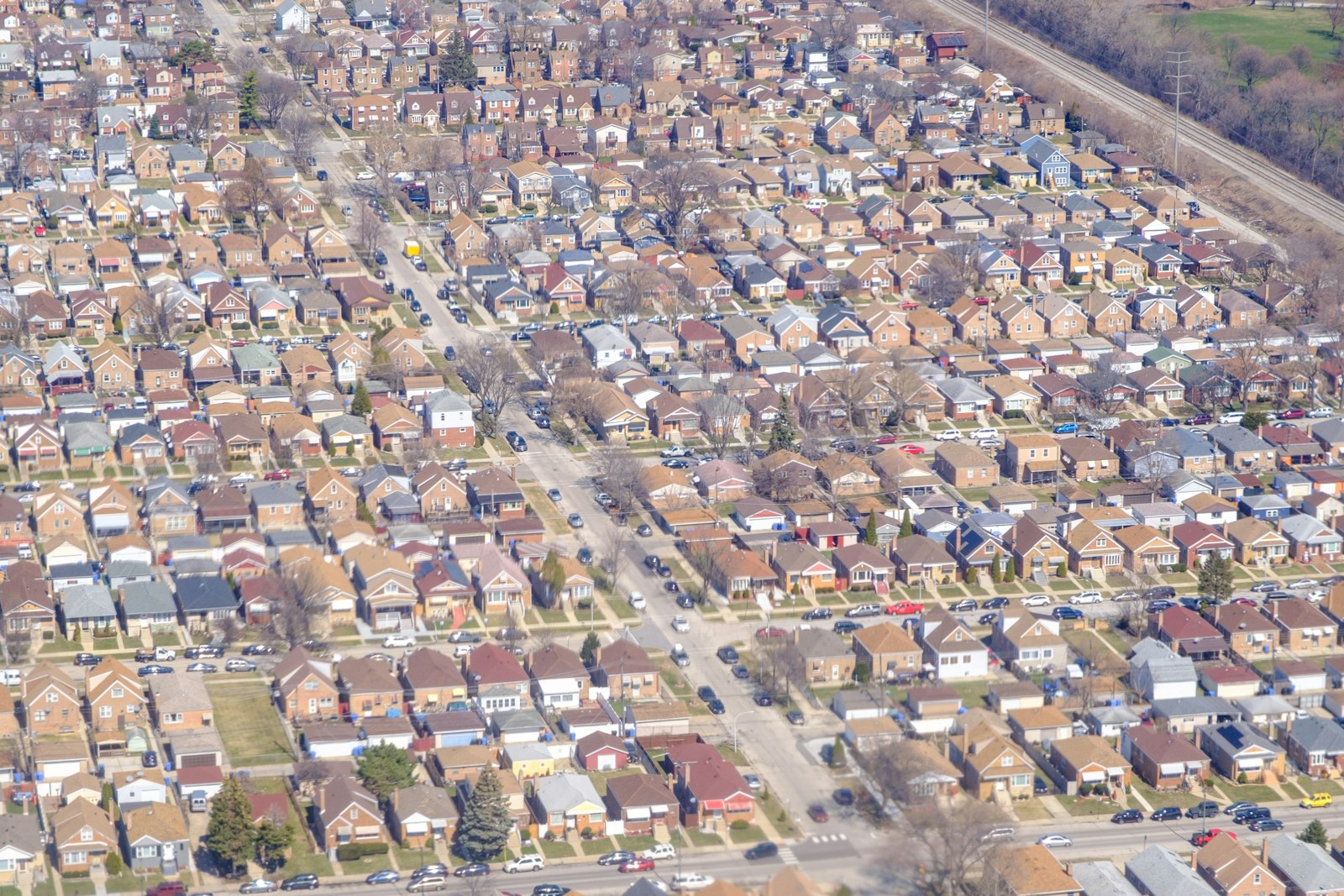
Here is the single most useful thing to know about property taxes in Utah: when the assessed value of homes across your city goes up, the tax rate is supposed to come down to match. Rising values do not automatically mean a rising bill. That is not an accident of the market. It is the deliberate design of Utah Truth in Taxation, and it is the strongest fiscal guardrail most Utahns have never heard of.
Passed by the Legislature in 1985, the law does something deceptively simple. It makes property tax a revenue-driven system rather than a rate-driven one, according to the American Legislative Exchange Council. A local government does not get an automatic windfall just because the housing market went up. If it wants to collect more property tax revenue than it did the year before, it has to say so out loud, in public, and take a recorded vote to do it.
How the Certified Tax Rate Actually Works
Every year, the state and the counties calculate a certified tax rate for each taxing entity—your city, your county, your school district, your water district. The certified rate is set at exactly the level that raises the same amount of property tax revenue as the prior year, not counting revenue from brand-new construction.
That one rule changes everything. Consider the math the way the law does it: if total taxable values in a district rise 20 percent, the certified rate has to fall by roughly 16.7 percent to keep revenue flat—(100% + 20%) × (100% − 16.7%) = 100% of the original tax. The rate floats down as values float up. A booming market, by itself, does not fatten the government's take.
Contrast that with most of the country, where a fixed millage rate sits still while assessments climb, and household tax bills balloon quietly, year after year, with no politician ever casting a vote. Utah decided in 1985 that if taxes were going to go up, someone would have to own the decision.
Why Your Bill Can Still Go Up
Truth in Taxation holds the total revenue of a taxing entity flat by default—but that is a district-wide average, not a personal guarantee. Your individual bill can still rise for reasons that are entirely consistent with the law:
- Your home appreciated faster than your neighbors'. If the average home in your district gained 10 percent and yours gained 25 percent, you now carry a larger share of the same total pie.
- A taxing entity voted for an increase. Cities, counties, and school districts can and do exceed the certified rate—but only through the public process below.
- You live under several taxing entities at once. A city hike, a county hike, and a school bond can stack on a single parcel even if each was small.
The point of the law was never to freeze taxes forever. It was to make sure that every dollar of increase is a choice someone made in the open, not a byproduct of an appraiser's spreadsheet.
The Hearing That Belongs to You
When a taxing entity wants more than the certified rate allows, the law puts it through a gauntlet designed to be seen. In practice, that means a defined sequence—here is the version Utah County walks its residents through:
- A public resolution declaring the entity's intent to exceed the certified rate, setting the date, time, and place of a hearing.
- A parcel-specific notice mailed to every property owner, showing the estimated dollar increase on their property and when the hearing will be held.
- A newspaper advertisement publicizing the hearing and the size of the proposed increase.
- A public hearing, held on the advertised date, where any resident can stand up and be heard before a vote.
- Final adoption, capped so the final number cannot exceed what the original resolution proposed.
Read that list again as a citizen rather than a taxpayer. Somewhere in your mailbox each summer is a notice with your name and your parcel on it, telling you exactly what a proposed hike would cost you and inviting you to show up and say your piece. That mailer is not junk. It is one of the most direct instruments of local accountability in Utah, and it works the same way a bill moving through the Legislature does—slowly, in public, on the record.
Utah decided in 1985 that if taxes were going to go up, someone would have to stand up and vote for it in a room where the neighbors could watch.
The Record Speaks for Itself
Guardrails are only worth defending if they actually hold. This one has. When Truth in Taxation passed, Utah ranked 24th in the nation in property taxes per $1,000 of personal income; ALEC reports the state now ranks 36th—a meaningful drop in relative burden over four decades of explosive growth. And by 2021, the Utah Foundation found the state's property tax burden had fallen to roughly $22.76 per $1,000 of personal income—the lowest in a century.
None of that happened because Utah stopped growing or because home values sat still. It happened because the default setting is restraint, and the burden of changing that setting falls on the government, not the homeowner. The law was modeled in part on a Florida statute, and Utah's version has since become a template other states study when they want to rein in stealth tax growth.
Why Conservatives Should Guard It Jealously
Truth in Taxation is conservatism doing exactly what it claims to do. It does not cap spending or dictate outcomes from the top down. It does something more durable: it aligns the incentives so that raising taxes is politically costly and transparency is automatic. A city council that genuinely needs more revenue can make its case and win the vote. A council hoping to ride a hot housing market to a silent revenue bump cannot.
That is the same instinct behind Utah's broader fiscal discipline—the rainy-day reserves that cushion a downturn and the choices about where a budget surplus actually goes. Good structure beats good intentions. Rules that force decisions into daylight outlast whoever happens to hold office.
The threats to a law like this are rarely a frontal repeal. They are the quiet erosions—new fees that sidestep the certified rate, special districts that multiply faster than voters can track, or proposals to weaken the notice requirement because the mailers are "expensive." Each one sounds reasonable in isolation. Together they would gut the whole point.
What You Can Do With This
The most conservative thing about Truth in Taxation is that it puts the tool directly in your hands and asks nothing more than that you use it.
- Open the notice. When the parcel-specific mailer arrives, read the number and note the hearing date.
- Show up. Truth in Taxation hearings are frequently sparsely attended. A handful of engaged residents can change the tone of the room and, sometimes, the vote.
- Ask the right question. Not merely "is this increase big?" but "what did the certified rate already give you, and why isn't that enough?"
The Republican Roundtable PAC exists to back leaders who respect guardrails like this one and to help Utahns understand the machinery of their own government well enough to defend it. If that's work you want to be part of, join us. The best fiscal protection Utah has only works when someone bothers to use it.
Sources
- Utah's Truth-in-Taxation for Property Taxes — American Legislative Exchange Council
- Truth in Taxation — Utah County Government
- Truth-in-Taxation law holds taxes in check while property values rise in Utah — Utah Foundation
Photo by Far Chinberdiev on Unsplash