
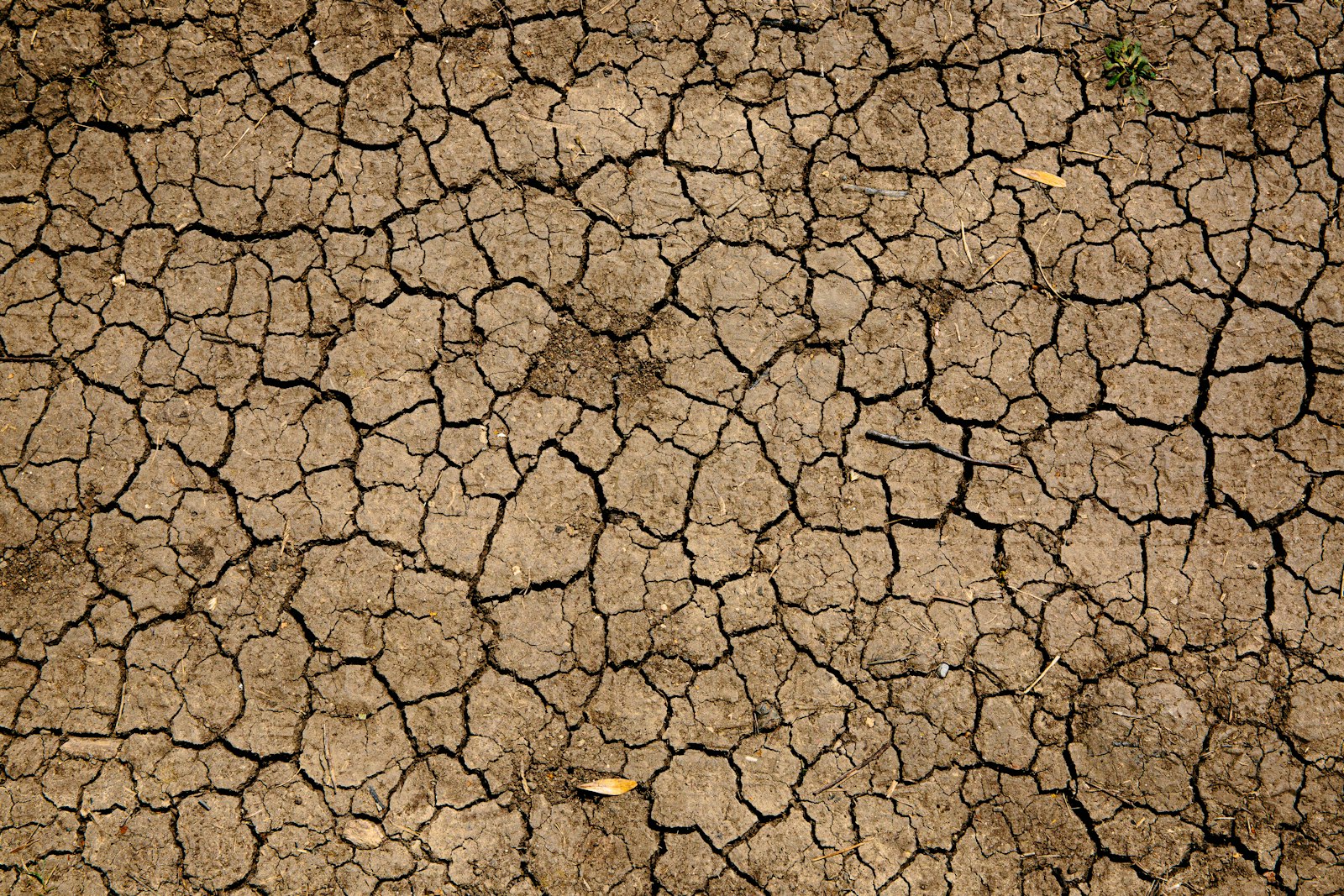
Utah is dry. Not urban-legend dry—officially dry. The state averages roughly 12.2 inches of precipitation a year, among the lowest totals of any state, and large swaths of the Great Salt Lake Desert get less than five. It is also one of the fastest-growing states in the country. Those two facts are on a collision course, and the 2026 legislative session was the clearest look yet at how Utah plans to handle it.
What emerged was not one water conservation policy, but a test between two of them. One track relies on state mandates—required rate hikes, banned landscaping choices, top-down rules imposed on cities and homeowners. The other relies on funded incentives—grants, metering, price signals, and voluntary markets that let people respond to real information about their own water use. This session, the mandate track mostly lost. The incentive track is already producing results. For a PAC built on pragmatic, problem-solving conservatism, that outcome is worth understanding—and defending.
The Scale of the Problem
Start with where the water actually goes. Agriculture accounts for roughly 80% of all water diversions in Utah, by far the largest share of any sector. Meanwhile, in cities and suburbs, an estimated 96% of residential water use in the Great Salt Lake basin goes to outdoor watering—lawns, gardens, and landscaping—not drinking, cooking, or bathing. Any serious utah water conservation policy has to work on both fronts at once: farms and lawns.
The state's own conservation targets reflect that scale. Utah's original goal, set under Governor Gary Herbert in 2013, was a statewide 25% cut in per-capita water use by 2025. The Division of Water Resources has since replaced that single number with nine region-specific conservation goals, which collectively aim for a 16% reduction in per-capita use by 2030. Utahns have already cut per-capita consumption by at least 18% over the past decade, according to the same regional planning process—real progress, even if the finish line keeps moving.
What Actually Passed: The Incentive Track
Look at what Utah actually funded in 2026, and a pattern jumps out: almost none of it forces anyone to do anything. It pays people to do it voluntarily, and it gives them the information to make a smart choice.
- Secondary water metering. Roughly 85% of Utah's 260,000 secondary (pressurized irrigation) connections started this year unmetered—meaning most Utah households had no idea how much outdoor water they were actually using. The Utah Board of Water Resources approved $190 million in grants for 114,000 new meters, covering 57% of the remaining unmetered connections and funded through federal dollars that expire at the end of 2026. Division of Water Resources director Candice Hasenyager called board approval "a historic day." The reason it matters: households that get a meter and can see their usage have cut consumption by 20% to 30%, for an estimated 54,000 acre-feet saved annually—with no rule requiring a single homeowner to water less.
- Agricultural water optimization. Built on 2023's SB 277, which appropriated $200 million, this program pays farmers and irrigation companies to modernize equipment rather than telling them to fallow fields. Roughly 250 projects have been completed so far, saving an estimated 40,891 acre-feet a year—enough to refill Washington County's Quail Creek Reservoir annually—with roughly $56.7 million distributed to date against $150.6 million obligated.
- Water leasing for the Great Salt Lake. HB 348 and HB 410 refined the state's voluntary program that pays farmers to lease water rights to the lake rather than use them, though HB 410 trimmed the leasing budget to $2.75 million (from $5 million) and limited farmers to leasing in two of every five years, according to Utah Public Radio's session recap.
Across the Great Salt Lake-focused bills alone, lawmakers secured or approved nearly $100 million in funding this session, streamlined how water can legally move toward the lake, and passed HCR 9, formally requesting federal partnership on restoration—all without a single new statewide mandate on cities or homeowners.
What Didn't Pass: The Mandate Track
Set against that record, three bills tried a different approach in 2026—and none of them made it to the governor's desk.
- HB 155 (Water Rates Amendments) would have required retail water providers to adopt escalating "block rate" pricing for residential water, explicitly designed to send a mandatory "price signal or financial incentive" to high-volume users. Sponsored by Rep. Doug Owens, D-Millcreek, it did not pass.
- HB 501 would have gone further, requiring cities to raise water rates until they equaled 3% of the median household's income—even after being amended to make the requirement optional and delay it to 2031. It never received a Senate floor vote.
- HB 328 would have banned overhead sprinklers on purely decorative turf at new commercial and multifamily developments in the Great Salt Lake basin starting in 2027. It passed the House but died in the Senate.
Utah funded the programs that pay people to conserve. It rejected the ones that would have ordered them to.
Why "Without Coercion" Is the Conservative Answer
It would be easy to read the failure of HB 155, HB 501, and HB 328 as Utah simply ducking a hard problem. That's not the more accurate reading. Utah's water agencies pursued, and won funding for, the conservation tools that don't require the state to override local rate-setting authority, a farmer's planting decisions, or a city council's landscaping ordinance. That is not avoidance. That is a coherent, conservative theory of how conservation should work.
Metering, optimization grants, and voluntary leasing all share a structure: they give people better information and better options, then let them decide. A farmer who takes an Agricultural Water Optimization grant is choosing to modernize, not being told to fallow a field. A homeowner who gets a secondary meter can see, for the first time, exactly how much of their bill is outdoor watering—and adjusts because the information itself is persuasive, not because a state inspector is checking the sprinkler schedule. That is the free market working the way conservatives say it should: with better price signals and better data, not more mandates.
The mandate bills, whatever their intent, ran into the same wall that state-imposed rules on local governance usually do in Utah: cities value setting their own water rates, and farmers value making their own irrigation decisions. A bill that tells every city in the state exactly what its rate structure must look like is a very different kind of policy than a bill that hands a city $190 million to meter its own system on its own timeline.
Where This Still Falls Short
None of this means the incentive-only approach is finished. Three gaps are worth watching heading into 2027:
- The 2030 metering deadline is a hard backstop. Utah Code 73-10-34 still requires all secondary connections to be metered by January 1, 2030, and the $250 million in federal grant funding covering most of the current wave expires at the end of 2026. Utilities that miss the funding window will have to rely on state loans at 1% interest—a real cost that could fall on ratepayers regardless of how voluntary the original program was.
- Urban and suburban turf policy remains unresolved. With HB 328 dead, Utah still has no statewide answer for decorative, non-functional turf outside of state government facilities, where SB 46 does cap new landscaping at 20% turf. Cities are left to write their own ordinances—consistent with local control, but uneven in practice.
- Incentive funding has to keep showing up in the budget. Grants only work as an alternative to mandates if the legislature keeps funding them at scale. A one-time infusion that dries up in a lean budget year would leave Utah with neither the metering data nor the mandate.
The Bottom Line
Utah's 2026 legislative session did not resolve the state's long-term water challenge, and no single session could. But it did answer a narrower, important question about how Utah intends to govern that challenge: through funded, voluntary tools that respect local control and private decision-making, not through statewide mandates on rates, crops, or landscaping. That is a genuinely conservative water conservation policy, and it is working—54,000 acre-feet a year from metering alone, 40,891 acre-feet a year from agricultural optimization, and nearly $100 million newly committed to the Great Salt Lake.
The Republican Roundtable PAC believes Utah should keep building on that record rather than abandon it for easier-sounding mandates. If you want to support the leaders defending that approach, join us.
Sources
- Utah State Climate Summary — NOAA/NCICS
- Agricultural Water Optimization Program — Utah Division of Water Resources
- How much water are Utah's agriculture optimization projects saving? — KSL
- Water Resources Announces Finalized Regional Water Conservation Goals — Utah Division of Water Resources
- Secondary Irrigation System Metering — Utah Division of Water Resources
- Utah board approves 'historic' $190M in secondary water meter grants — KSL
- There's a new 'driver' in Great Salt Lake water. Will Utah target it next? — KSL / Great Salt Lake Collaborative
- How Utah's 2026 legislative session reshaped water policy — Utah Public Radio
- 2026 session was good for Great Salt Lake, but it could have been great, group says — KSL
- 2026 Utah Legislative Bills for Water Utilities — Rural Water Association of Utah
Photo by Mike Erskine on Unsplash