
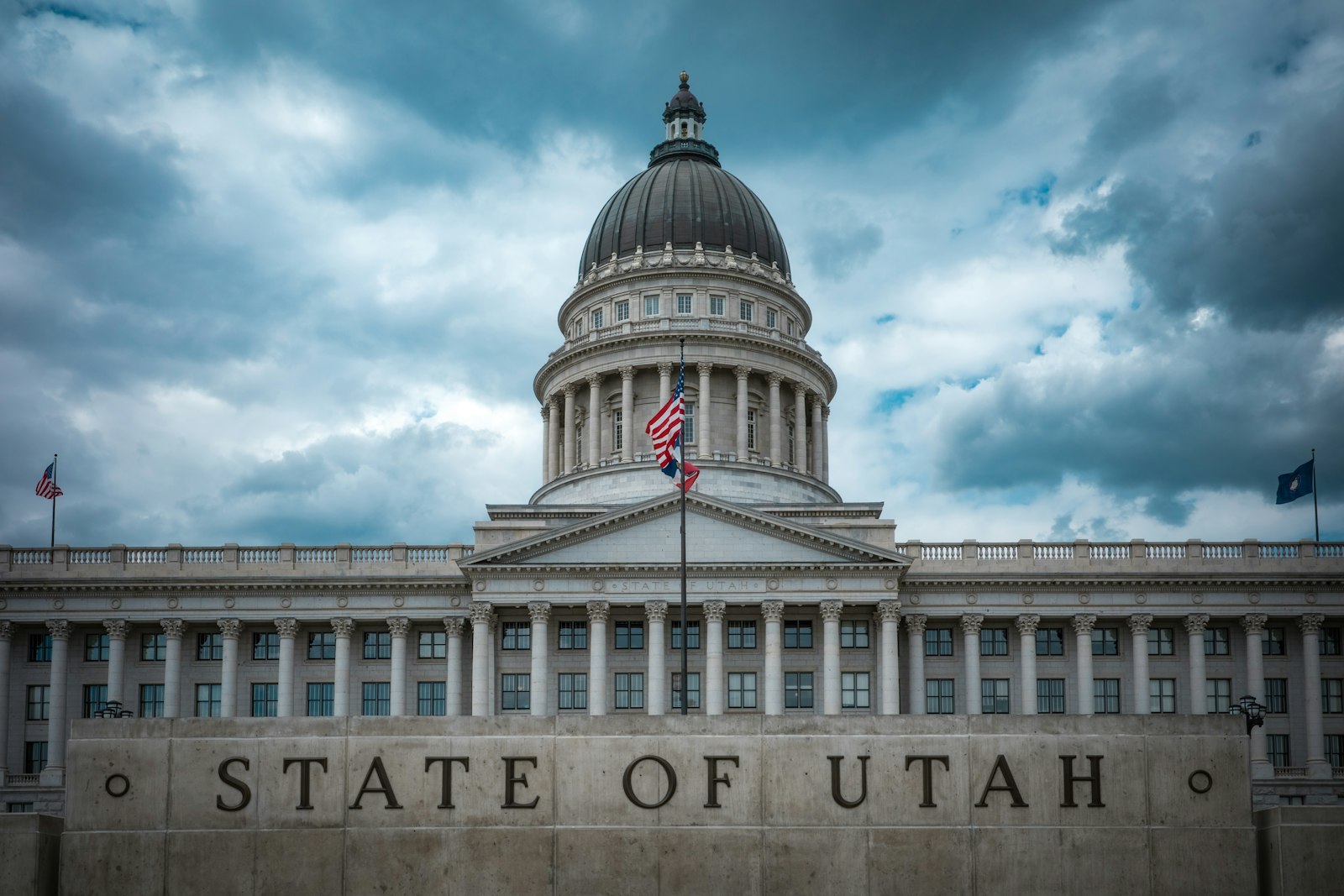
Utah's 2027 legislative session convenes Tuesday, January 19, 2027, and must adjourn 45 days later, on Friday, March 5. In that window a newly elected Legislature will write a balanced budget for the state, decide how much of the surplus to return to taxpayers, and turn roughly a year of interim committee study into actual law. If you only remember one thing about the session before it starts, remember this: the clock is the point. Everything else is negotiation inside it.
That makes a preview worth your time. The bills that pass in March are, more often than not, the ones that were already written, scored, and lined up in the fall. Below is what we know is coming, what the money looks like heading in, and where pragmatic conservatives should keep their eyes.
The 45-day clock is the first constraint
Utah runs one of the shortest full legislative sessions in the country. Forty-five calendar days is not much time to move hundreds of bills, and the calendar front-loads the hardest work. The Legislature's own schedule sets an early deadline to pass or defeat each base budget bill by January 28—nine days in—so that appropriations subcommittees can spend the back half of the session arguing over new money rather than the baseline.
The compression is a feature, not a bug. A short session rewards preparation and punishes grandstanding. A bill that shows up in week five with no fiscal note and no committee hearing behind it is, in practical terms, already dead. That's why the interim period matters so much, and why we've argued before that the real action happens in the interim committees where Utah law is actually drafted. By January, most of the serious ideas have already had their first public airing.
If the mechanics of how a proposal becomes law in that 45-day sprint are fuzzy to you, our step-by-step walk through the Utah process is the place to start. The short version: committee, floor, the other chamber, the governor—and a calendar that forgives almost nothing.
The money question conservatives should watch
Every Utah session is, at bottom, a budget session. As the Utah Constitution requires, legislators must balance the budget to projections of available revenue—there is no option to simply spend more than the state expects to take in. That single rule shapes every other fight.
Here's where things stand going in. In the 2026 session, lawmakers enacted a budget of roughly $31.6 billion in total funds, with about $12.4 billion in state funds drawn from the General Fund, Income Tax Fund, and Uniform School Fund. They also kept the recent pattern of returning money to taxpayers, trimming the state income tax rate from 4.5% to 4.45% at an ongoing cost of about $101 million. On the spending side, public education took the largest share of new money, with the value of the weighted pupil unit rising 4.2% to $4,870.
Those numbers set up the central tension of 2027. Utah has cut taxes in consecutive years, and some lawmakers will want to keep going. But every ongoing dollar returned is a dollar not available for the demands piling up behind it—schools, water infrastructure, roads, and a Medicaid program whose costs keep climbing. Whether there is room for another cut depends almost entirely on the revenue estimates adopted this winter, not on anyone's appetite for a headline.
A short session rewards preparation and punishes grandstanding. The bills that pass in March are usually the ones that were already written, scored, and lined up in the fall.
The first real signal arrives before the session does. Each December, the governor releases a budget recommendation built on updated revenue forecasts—his opening offer to a Legislature that ultimately controls the purse strings. Read that document when it lands. It is the clearest early tell for how much the state thinks it can afford, and it frames the tax debate we explored in our look at Utah's flat tax, three years in.
What's already teed up
A preview is really a reading of momentum. Here are the clusters most likely to dominate committee time.
- Housing supply. The 2026 session was the most ambitious in recent memory on housing, but it left plenty on the table. Expect 2027 to be about implementation and the next round of supply-side reform—whether the permitting and lot-size changes already passed are actually producing homes, and what comes next if they aren't.
- Water and growth. Great Salt Lake levels, water-district accountability, and the hard arithmetic of adding residents in a desert are not going away. These are perennial Utah questions precisely because they never fully resolve.
- Energy. Utah's "all of the above" posture—baseload reliability alongside new generation—continues to run into demand from data centers and population growth. Look for bills on siting, transmission, and the state's role in large projects.
- The budget squeeze on health care. Medicaid remains one of the fastest-growing lines in the state budget, and federal cost-sharing changes make it a recurring pressure point for appropriators.
- Education funding. Advocacy groups are already circulating 2027 asks; the Utah Education Association, for example, has published priorities centered on per-pupil funding above the required inflation adjustment. Where that money comes from, within a balanced budget, is the fight.
None of these is new. That's the point. Utah's policy agenda is less a series of surprises than a set of long-running problems the Legislature chips at 45 days per year. The question each session is not which issue but how far.
A pragmatic-conservative lens
So what should engaged Utah conservatives actually want out of 2027? Three things, in order.
- Discipline before generosity. A tax cut only counts if the state can sustain it through a downturn. Returning money to taxpayers is a conservative instinct we share—but so is refusing to make promises the next recession would force the Legislature to break. Match the cut to the forecast, not to the applause.
- Supply over subsidy. On housing, water, and energy alike, the durable conservative answer is to let Utah build and produce more, not to paper over scarcity with programs. The sessions that move those supply curves will do more good than any one-time appropriation.
- Finish what's started. Utah's best policy work is iterative. The reforms passed in 2024, 2025, and 2026 need follow-through and honest measurement more than they need to be replaced by the next shiny idea. Oversight is unglamorous and it is exactly the job.
A new class of legislators will be sworn in this January, and some of the faces in those committee rooms will be unfamiliar. That is all the more reason to pay attention early—before the bills are numbered and the positions have hardened.
The bottom line
The 2027 session will be won and lost in the details: a revenue number adopted in December, a base budget passed in the session's first nine days, a handful of bills that cleared interim committee while most Utahns weren't watching. None of it will make national news. All of it will shape how Utah grows.
The Republican Roundtable PAC follows these sessions closely because the unglamorous work of governing is where principled conservatism either delivers or doesn't. If you want to understand Utah's next 45 days—and support the kind of pragmatic, problem-solving leadership that uses them well—join us. The session starts in January. The preparation starts now.
Sources
- Significant Session Dates (2027 General Session) — Utah State Legislature
- Sine-Nara to the 2026 Utah General Session (FY2027 budget summary) — Utah Legislative Fiscal Analyst
- Budget Recommendations — Utah Governor's Office of Planning and Budget
- 2027 Legislative Priorities — Utah Education Association
Photo by Nils Huenerfuerst on Unsplash