
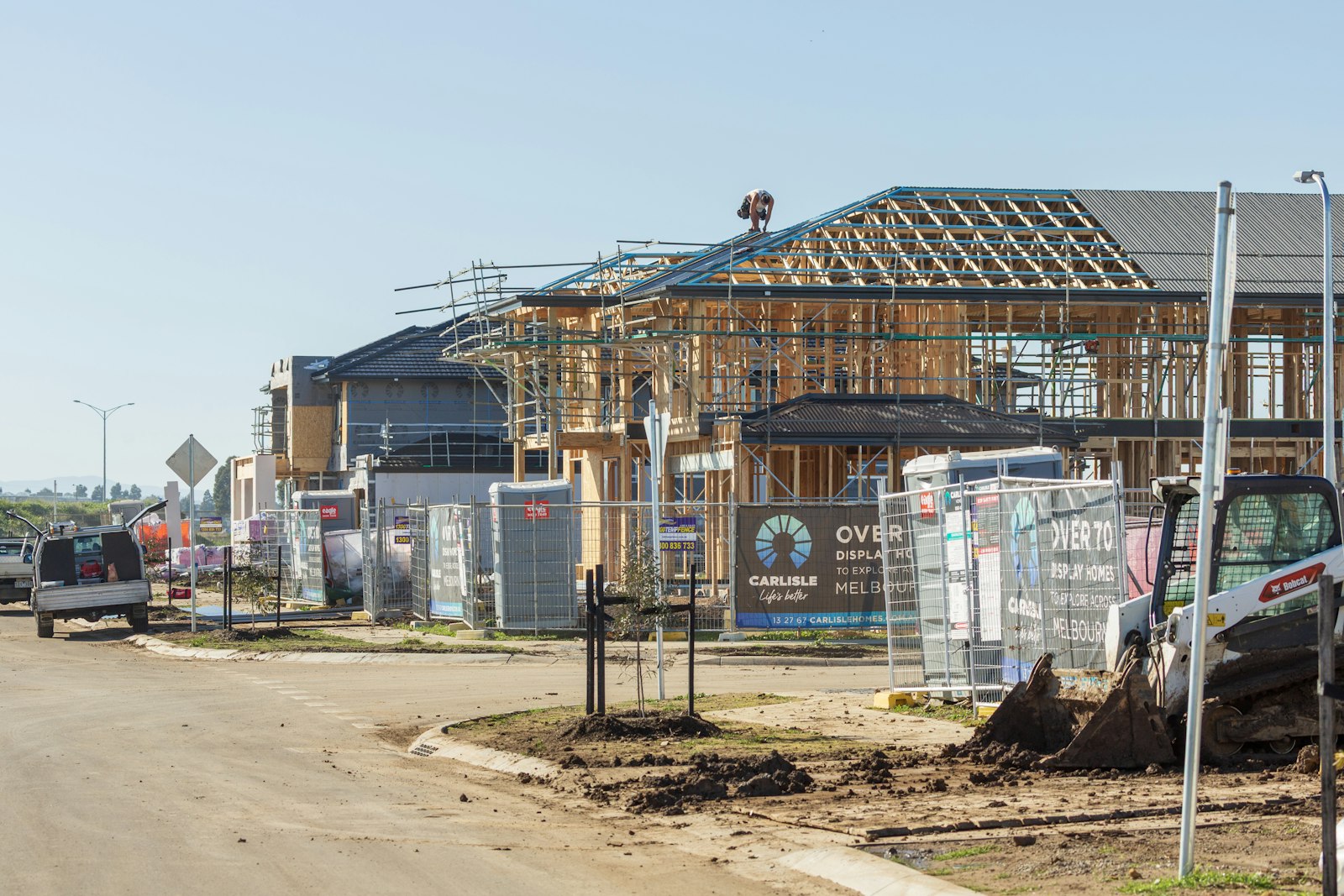
Did Utah's starter-home push work? The honest answer is: partly, and the part that worked isn't the part that gets the headlines. Roughly two years after the state put real money behind Governor Cox's goal of 35,000 new starter homes by the end of 2028, about 7,909 had been built as of mid-2026—less than a quarter of the target with the clock half run. That is behind pace. But the Utah First Homes program results also show something more useful than a pass-fail grade: the supply-side reforms are pulling their weight, and the demand-side subsidies are doing less than their price tag suggests.
For a movement that prizes evidence over slogans, that distinction is the whole ballgame. So let's look at the numbers.
The Utah First Homes Results, by the Numbers
Start with the goal itself. The target is 35,000 new starter homes priced at or below $450,000, statewide, by the end of 2028. For context on why that number matters, the median home listing in Utah now runs about $579,000. The gap between those two figures is the entire reason the policy exists.
The original "Utah First Homes" package, announced in December 2023, carried a $150 million price tag, split three ways:
- $50 million for the First-Time Homebuyer Assistance Program—a demand-side subsidy that helps buyers get into a home.
- $75 million to expand the State Infrastructure Bank for housing projects—a supply-side tool that helps the roads, water, and sewer get built so homes can follow.
- $25 million for starter-home innovation and construction.
Keep that two-to-one tilt toward supply in mind, because it turns out to track with what's actually moving the needle.
What's Working: Dirt, Pipes, and Permits
The homes that are getting built are getting built because somebody cleared the path in front of them. Lawmakers have since gone well beyond the original package—setting aside roughly $250 million in grants and loans to help cities pay for the infrastructure that has to exist before a single foundation is poured. The governor's housing advisor expects that investment alone to yield around 12,500 starter homes.
You can see it on the ground. In Weber County, one builder is putting up 275 starter homes and reports a waiting list—"they all sell before they're finished". One of those homes recently listed at $423,000, comfortably under the cap and a real-world rebuttal to anyone who says new construction simply can't come in affordable.
This is the conservative theory of the case, confirmed by data: when you remove the government-created bottlenecks—slow permitting, missing infrastructure, lot-size rules that forbid modest homes—the private market builds. It builds fast, and it builds at prices people can reach. The 7,900-odd homes already standing are proof the mechanism works. The problem is throughput, not direction.
The supply reforms are proof the mechanism works. The problem is throughput, not direction.
What's Less Clear: Writing Checks to Buyers
The demand side is a harder story. Utah's First-Time Homebuyer Assistance Program, run through the Utah Housing Corporation, offers up to $20,000 toward a down payment or closing costs—structured as a loan that isn't repaid until the buyer sells or refinances. To qualify, the home must be newly built and priced at or below $450,000.
By the numbers, the program has moved real families off the sidelines: about 3,000 households have bought a first home through it, with legislators providing roughly $70 million and funding left for about 500 more. Three thousand Utah families in homes is not nothing, and the new-construction requirement is a smart design choice—it steers the subsidy toward adding housing rather than simply bidding up the homes that already exist.
But the critique conservatives should take seriously comes from the economics, not the politics. As Fox 13 reported, finance scholars warn that subsidizing demand without a matching jump in supply tends to push prices up, not down—one noted that the state is "talking about maybe helping thousands of families when the need is in hundreds of thousands." A $20,000 check helps the family that gets it. Whether it lowers the price of the next house down the street is a very different, and much more doubtful, question.
This is the same lesson that runs through nearly every honest housing analysis, and it's one we've made before in our look at why Utah's housing math is fundamentally a supply problem: you cannot subsidize your way out of a shortage. You can only build your way out.
So, Did It Work?
Grade it like a conservative would grade any government program—against its own stated goal and its own cost.
- On the headline goal, it's behind. Under a quarter of the way to 35,000 with half the time gone means the back half has to run far faster than the front half did. Governor Cox has been candid that the target was always, in his word, ambitious.
- On the mechanism, it's validated. The infrastructure and land-use reforms are producing homes at reachable prices. That's the piece worth doubling down on.
- On the subsidies, the jury is out. Three thousand families helped is a real result; whether $70 million of demand support was the highest-leverage use of that money, when the binding constraint is supply, is a fair thing to question before the next budget.
None of this is an argument for abandoning the effort. It's an argument for being clear-eyed about which lever actually lifts the load. The state deserves genuine credit for setting a measurable target and publishing the scoreboard—that transparency is what makes a conversation like this one possible. Too many government goals are written so vaguely that no one can ever say whether they were met. This one can be measured, and that is a feature, not a bug.
The Path to 2028
If Utah is going to close the gap, the next two years should lean into what's working. That means more infrastructure financing, faster permitting, and continued pressure on the local land-use rules that still make modest homes illegal to build in too many neighborhoods. It means treating the shortage as the growth challenge it is—the natural cost of being one of the most desirable states in the country to raise a family, a tension we've explored in how Utah balances housing against its water limits.
And it means holding the demand-side programs to the same evidentiary standard as everything else. If the data shows the subsidies are mostly moving families around rather than expanding the housing stock, that money should follow the supply side, where every dollar buys more. That's not ideology. It's the pragmatic, results-first conservatism that built Utah's reputation for competent governance in the first place.
The Republican Roundtable PAC is watching this scoreboard closely, because housing is where Utah's promise to the next generation gets kept or broken. If you want to help make sure the state keeps building on what works, join us—the Utahns hoping to buy their first home are counting on leaders who read the numbers honestly.
Sources
- Utah is halfway to Gov. Cox's starter home deadline with less than 25% built — KUER (Oct. 14, 2026)
- Gov. Cox and Lt. Gov. Henderson announce $150 million "Utah First Homes" program — Office of Governor Spencer J. Cox
- Here's the pros and cons of Utah's first-time home buying program — Fox 13 Investigates
- What we know about Gov. Cox's goal of building 35,000 starter homes by 2028 — ABC4
Photo by Troy Mortier on Unsplash